Friday, May 16, 2014

Is this Any Way to Discuss Health Care Policy? - Television Advertising about US Health Care Reform Cost $445 Million from 2010 -2014

Every now and then, we get an anonymous comment criticizing our "lack of balance" or words to that effect, maybe because we criticized some action by a big, often but not always for-profit, health care organization.  We usually respond that we have no obligation to be balanced, since
- We publish opinion, not hard news
-  It is questionable that even hard news reporters must report all opinions on an issue, if some of those opinions are demonstrably less credible
-  There are far more voices extolling the wonderful "innovations" provided by our current "best health care system in the world," than providing our sorts of criticism.

To expand on that last point - a recent news item suggests how much of the health care policy debate is paid marketing and public relations, rather than individual voices of citizens, health care professionals, or even health care policy experts.

From the AP, via the Seattle Post -Intelligencer,

A new analysis finds the nation's health care overhaul deserves a place in advertising history as the focus of extraordinarily high spending on negative political TV ads that have gone largely unanswered by the law's supporters.

The report, released Friday by nonpartisan analysts Kantar Media CMAG, estimates $445 million was spent on political TV ads mentioning the law since the enactment of the Affordable Care Act in 2010. Spending on negative ads outpaced positive ones by more than 15 to 1.

In particular,

In the 2014 congressional races, 85 percent of the anti-Obama ads were also anti-'Obamacare' ads, the analysis found. In some competitive races, 100 percent of the pro-Republican TV ads aimed at Democrats contained anti-health law messages.

Over the four years, an estimated $418 million was spent on 880,000 negative TV spots focusing on the law, compared to $27 million on 58,000 positive spots, according to the analysis. Nearly all of the spending was on local TV stations, in races ranging from state offices such as treasurer and governor to Congress and the presidential election.

That is just amazing.

My concern is not so much that much of this advertising is against "Obamacare."  We have not often written about the Affordable Care Act (ACA), aka "Obamacare," and what we wrote at best was mild praise.  As I posted back in 2009, very little of the law had anything to do with the issues we discuss on Health Care Renewal.  In my humble opinion, since the law went into effect, it has increased access to health insurance, especially for certain groups of people that commercial health care insurers previously spurned, e.g., older people and people with pre-existing diseases.  It also contained provisions that might increase disclosure of conflicts of interest, and foster comparative effectiveness research.  On the other hand, the law has done nothing to reduce concentration of power in health care.  It has done nothing to make health care leaders more accountable, especially for their organization's unethical or even criminal behavior, decrease their ability to line their pockets regardless of such behavior, and thus reduce their impunity.  It will not obviously decrease conflicts of interest affecting those who make decisions about patient care or health policy, lock the revolving door between government and the health care industry, end manipulation of clinical research to serve vested interests, or suppression of research whose results offend such interests, etc, etc.  So there is plenty to discuss about health care reform and related matters of health care policy.

Yet a major venue of US public discussion about health care policy, at least having to do with health care reform legislation, appears to be 15 -60 second paid television advertisements.  Often who pays for these ads are obscure, as certainly are the identities of the advertising or public relations firms that actually craft them.  Certainly, the ads do not explain who might profit were what they urge be implemented. The ads may appeal to emotion, or engage in logical fallacies.  And they appear in millions of peoples homes day in and day out.

Such advertising, added to all the other billions of dollars worth of marketing and public relations that swirl around health care, make any sort of intelligent discussion very difficult.  The advertising frenzy renders the voices of individual citizens, health care professionals, and even health policy experts  whispers in comparison.

While there are ostensible free speech advocates who defend these advertisements, and maybe who promote the free speech rights of corporations as the same as those of human citizens (without, of course, many of the responsibilities of citizens), none of these vocal self-proclaimed civil libertarians seem to be doing anything to defend the audibility of the voices of individuals in the health care policy debate.

So we will continue to do what we can to bring some healthy skepticism about loud proclamations in health care made by people who stand to gain financially from their effects.  But is it any wonder that our voices create so few echoes?

Tuesday, May 13, 2014

The Continuing Mystery of the Fugitive Founder and Missing Money - What it Says About the Opacity of Offshore Medical Schools

The next chapter in the bizarre tale of the fugitive founder of an off-shore (from the US and Canada) Caribbean medical school, and his now convicted spouse, do not solve any mysteries, but raise larger concerns about the accountability, or lack thereof, of leaders of important health care organizations.

Introduction: the Fugitive Founder and Convicted Spouse

As we posted in October, 2013, drawing an amazing for us number of comments, the couple who founded two Caribbean medical schools which catered almost entirely to US and Canadian students ran into significant legal trouble.  Founder David Leon Fredrick and his wife, Dr Patricia Lynn Hough were indicted for tax evasion for failing to report income from the two medical schools they allegedly owned, and later sold.

The schools were Saba University School of Medicine, on Saba, and the Medical University of the Americas, on Nevis.  The initial legal proceedings revealed that while Saba University School of Medicine was apparently first set up by a non-profit foundation (or NGO) run by the couple, somehow it became for-profit owned by Mr Fredrick and Dr Hough, and Saba and the Medical University of the Americas were subsequently sold to a private equity group, Equinox Capital.

Before jury selection started, Mr Fredrick disappeared.  Dr Hough was eventually convicted of defrauding the US Internal Revenue Service, and income tax evasion, after trial testimony to the effect that the couple concealed money in a Swiss bank, got $36 million from the sale of the schools, and bought an airplane, two houses, and a condominium.

Left mysterious at that time were Mr Fredrick's whereabouts, where the money that the couple derived from the sale of the medical schools went, and how a school that began as a non-profit organization became a for-profit corporation owned by the couple.  The case should have lead to some concerns about the leadership and governance of the off-shore medical schools that now train increasing numbers of would be US and Canadian physicians.

However, after Dr Hough was convicted, there was little public discussion of these issues, at least until Dr Hough's recent sentencing.  (There were some interesting comments made on our blog post, many from anonymous erswhile defenders of Saba University and/or Mr Fredrick and Dr Hough.  While they expressed some interesting opinions, in my humble opinion they did not add any substantive facts to the discussion.)

Latest Developments in the Case

In the past few weeks the case got a little more public notice in terms of reporting of the legal proceedings leading to the sentencing of Dr Hough   They brought to light some additional contentions by the prosecution, which deserve some attention because after all, they won their case.

The Amount of Money the Couple Made


As reported by the Sarasota (FL) Herald-Tribune,  Dr Hough was sentenced to two years in federal prison, three years of supervised release, and to repay $15 million to the IRS.  In addition,

 Prosecutors say Hough and Fredrick sold the schools and associated real estate in April 2007 for more than $35 million. An IRS agent testified last Thursday that Hough also made more than $12 million in income from the two schools from 2003 until 2007.

How much Mr Fredrick made was not discussed since it was not relevant to Dr Hough's sentencing. 

The Effort that Went into the Plot

According to Bloomberg,

'Hough’s crimes were neither impulsive nor isolated but required sophisticated transactions, coordination with foreign bankers, annual lies to the federal government, and by her own admissions, trips to Switzerland,' prosecutors wrote in a sentencing memo on April 14. 'Hough made calculated decisions to cheat, over and over again.'

Also,

Prosecutors accused the couple of crafting their scheme with UBS AG (UBSN) banker Dieter Luetolf and Swiss financial adviser Beda Singenberger, both unindicted co-conspirators.

Singenberger, who was separately charged with helping 60 U.S. clients hide $184 million in offshore accounts, hasn’t responded in federal court in New York.

In more detail,

Prosecutors said the couple used an array of accounts in the names of businesses to hide their money and employed 'e-mails, telephone calls and in-person meetings to instruct Swiss bankers and asset managers to make investments and transfer funds from their undeclared accounts at UBS.'

The Mysteries Remain


Where Did the Money Go?

As noted above, the sale of the two medical schools netted Mr Fredrick and Dr Hough about $35 million.  Where that went is still unclear.

How Did Mr Fredrick and Dr Hough Become Owners of a Previously Non-Profit Medical School?

As noted above and in our previous post, Saba University School of Medicine began as a non-profit managed by Mr Fredrick and Dr Hough.  Somewhere along the way, the couple assumed ownership of the school.  There seems to be no record and no discussion of how this happened.  In the US, a conversion of a substantial non-profit, like a medical school, to a for-profit, ordinarily would require some regulatory approval and public discussion.  Furthermore, in most cases, non-profit conversions to for-profit would require some sort of protection of the assets of the former non-profit, often leading to a spin-off of a new non-profit foundation.   None of this apparently happened in this case (which admittedly did not occur in the US.)  How did Mr Fredrick and Dr Hough just take over a non-profit, sell it, and keep all the money involved?

Where is Mr Fredrick and Why did He Flee?

We need Sherlock Holmes for this. 


What Does This Case Say About the Leadership and Governance of Offshore Medical Schools?

So the latest details revealed suggest a fairly intricate plot by the American couple who founded two Caribbean medical schools.  The plot allegedly netted them millions, and now resulted in one of the couple remaining a fugitive, and the other convicted of federal crimes.

The biggest issue raised by this case, in my humble opinion, is not about financial crimes, tax-evasion, or the hiding of assets in Swiss banks.  It is about the leadership and governance of offshore Caribbean medical schools, and by extension, of academic medicine and health care.  In 2010, Eckhert documented that the number of offshore medical schools, "for-profit institutions whose purpose is to train U.S. and Canadian students who intend to return home to practice," but not to train physicians to practice in the countries in which these schools are located, was rapidly growing.(1)  By 2010, there were 33 such schools, 20 of which were new since 2000.

These offshore medical schools are not accredited in the US or Canada, and such accreditation is currently not required for individual graduates of such schools to be admitted to US house-staff programs or for US licensure.  So perhaps it is not surprising that little is known about these schools.

How they choose students, the qualifications, or even names of their faculty, their curriculum, how they supervise clinical training (which is mostly done by affiliated North American hospitals), and what happens to their graduates are boscure.  Eckhert attempted to describe what is known, but noted "variability exists in the availability of information on faculty; where data exists, it is noted that most of the permanent on-site basic science faculty are internationally trained, many have no documented medical education experience in the United States, and it is not uncommon for them to be OMS [offshore medical school] alumni."

Even less is known about who leads these schools, who if anyone is responsible for their stewardship, and even who owns them.  The current case suggests that Saba University School of Medicine was run by couple who mysteriously assumed ownership of the school after leading it as a non-profit organization, then sold it to private equity for millions in a transaction that eventually left one a convicted criminal and the other a fugitive.  Yet none of this came to light until the federal government launched an investigation not of offshore medical schools, but of offshore money laundering and happened to catch the couple in the investigational web. No regulatory process, no watchdog organization in the US or Canada, or on Saba apparently found this out until it was revealed in an investigation by the US federal government that had nothing specifically to do with health care or offshore medical schools.  This suggests that offshore medical schools now can be lead and run by anyone, qualified or not, honest or criminal, without any oversight or accountability.  

For example, even today little is known about the leadership of Saba University School of Medicine.  The school currently provides only minimal biographical information on its administration.  Its President is listed as Joseph Chu MD MPH, who appears to have the same educational credentials (MD from Georgetown, MPH from University as Washington) as one Joseph Chu who is apparently a Clinical Associate Professor of Epidemiology at the University of Washington.   Dr Chu's specialty and previous experience are not apparent.  Whether the Dr Chu at University of Washington is the same as the President of Saba is unclear.  If they are the same, how Dr Chu holds down these two jobs is not clear.

For comparison, most US schools provide extensive information about their leadership.  Just as an example, see the introductory page on the Dean of the University Washington medical school.

Even less is known about the stewardship or governance of Saba University School of Medicine.  Many US medical schools have their own boards of trustees who are supposed to provide stewardship. For example, the UW board is here.  Their membership is generally known.  Furthermore, most US medical schools report to university leadership, again whose identity is known, and are subject to governance by a university board of trustees.  We have certainly criticized the leadership and governance of US academic medicine.  At least, however, it is possible to find out the names of the people responsible. 

However, while Saba University School of Medicine is still apparently owned by Equinox Capital according to the latter's website, to whom Dr Chu reports at Equinox Capital is unclear.  Whether Saba has a board of trustees, or any such similar stewardship mechanism, is unclear.  So who is ultimately accountable for Saba is unclear.  Probably just as unclear is who leads, who stewards, and who is accountable for the leadership of most other offshore medical schools.

While Eckhert wrote in 2010 that the increasing presence of offshore medical graduates in the US "obligates U.S. medicine to take a closer look at these educational programs," no such scrutiny has occurred since then.  While offshore medical schools account for the training of an increasing proportion of US (and presumably Canadian) physicians, we know next to nothing about their leadership and governance.  This seems to be just another part of the decreasing accountability of the leadership of US health care, and the increasing opacity of the governance and stewardship of US health care organizations.  True US health care reform would make leadership transparent and accountable.         

Reference
 1.  Eckhert NL.  Private schools of the Caribbean: outsourcing medical education.  Acad Med 1010; 85: 622-630.  Link here. 

Monday, May 12, 2014

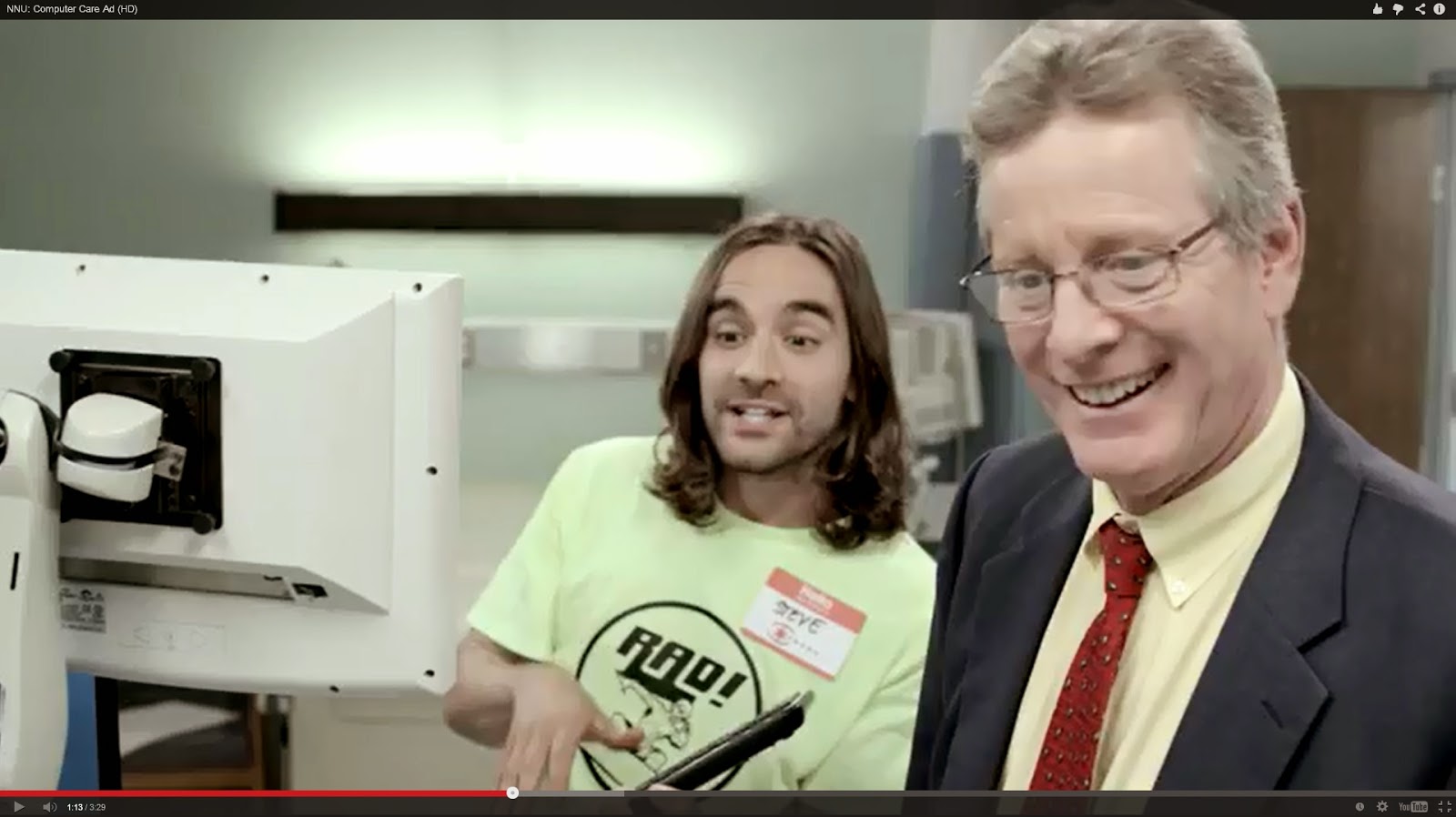
A Nurse's Union, National Nurses United, Takes On Bad Health IT

National Nurses United (http://www.nationalnursesunited.org/), a nurse's union, takes on bad health IT with both satire and seriousness:


Hey dude!  I'm your highly-cost effective computer technician Steve.  Tell me what's hurtin' and I'll program it into Frank, our computerized doctor and nurse replacement. (YouTube video at https://www.youtube.com/watch?feature=player_embedded&v=YthF86QDOXY.)

See their page at http://www.nationalnursesunited.org/site/entry/insist-on-an-rn

I note that nature abhors a vacuum, and since medicine's watchdogs (e.g., FDA), physicians and their organizations, the Medical Informatics community and others who know better have left a deep vacuum over health IT problems, I'm glad unionized nurses have stepped up to the plate.

-- SS

Cerner: "It’s in the DNA of our company to have the vision and passion to fix what’s broken in health care." Maybe they should fix their software first?

I point out this hyper-exuberant piece on health IT in the St. Louis Post-Dispatch.

Clearly someone at Cerner thinks they're going to cure the world with "population health" and their computer software:

With its Healthy Nevada initiative, Cerner Corp. cultivates a culture of health
St. Louis Post-Dispatch
Diane Stafford,  Kansas City Star
May 11, 2014

http://www.stltoday.com/news/special-reports/mohealth/updates/with-its-healthy-nevada-initiative-cerner-corp-cultivates-a-culture/article_8cc3168f-fd9f-5e7e-ba80-cc05dd6a35f9.html

Cerner Corp. employees started visiting Nevada, Mo., in 2011, looking to adopt a community as a testing ground for theories to control skyrocketing medical costs.

At the outset, “our discussions were marked by a lot of confusion,” recalled City Manager John David Kehrman. “We thought of Cerner as a data company. We didn’t understand what they wanted.”

The North Kansas City-based company, grown to global prominence by selling health care information technology to hospitals and doctors, aimed to reach a broader audience with a message: You have to take more responsibility for your own health.

... the company’s bigger evolution is that it’s investing millions in its next-generation software, dubbed Healthe Intent, which tracks individual and group health and treatment results. It re-imagines jobs in the health care industry and eventually will reach into patients’ homes.

If the initiatives blossom, Cerner executives believe they will boost the company’s revenue by billions of dollars a year ... “Cerner’s founders never saw themselves being a health care IT company,” Swindells asserted. “They saw themselves fixing health care.”

Wow.  That's a neat trick for a health IT company.

(As I asked of health IT company CEOs making similar statements back at a 1997-or-so Microsoft Healthcare Users Group meeting, "How are you going to revolutionize healthcare when you and nearly everyone at this meeting has no actual healthcare experience?"  They had no rational answer.  See "Broken Chord", Healthcare Informatics, Feb. 1999, archived at this link.)

I won't comment further on the content of the St. Louis Post-Dispatch piece, which is marketing agitprop.  It's their right to produce such material, after all.  Read it for yourself and learn of our glorious Cerner-driven health utopia.

I will comment, however, on one line in the piece, namely:

... “It’s in the DNA of our company to have the vision and passion to fix what’s broken in health care,” said Matthew Swindells, Cerner’s head of population health and global strategy.

Considering the broken health IT this company introduces into the market upon unsuspecting physicians, nurses and patients [e.g., see notes 1-6], perhaps they should consider fixing what's broken in health IT before releasing to market, and certainly before attempting to tackle the infinitely harder task of "fixing what's broken in health care."

-- SS

Notes:

[1]  November 17, 2013. "Another 'Survey' on EHRs - Affinity Medical Center Nurses Warn That Serious Patient Complications 'Only a Matter of Time' in Open Letter", http://hcrenewal.blogspot.com/2013/11/another-survey-on-ehrs-affinity-medical.html
  
[2] January 19, 2012. "[British MP] Bacon calls for halt on [Cerner] Millennium", http://www.ehi.co.uk/news/acute-care/7471/bacon-calls-for-halt-on-millennium

[3]  January 21, 2011.  "MAUDE and HIT Risks: What in God's Name is Going on Here? [Cerner health IT defects reports]", http://hcrenewal.blogspot.com/2011/01/maude-and-hit-risk-mother-mary-what-in.html

[4]  March 4, 2011. "A study of an Enterprise Health information System [Cerner Firstnet]", Prof. Jon Patrick, Univ. of Sydney, http://sydney.edu.au/engineering/it/~hitru/index.php?option=com_content&task=view&id=91&Itemid=146

[5] Oct. 20, 2010.  "Medical center has more than 6000 "issues" with Cerner CPOE system in four months", http://hcrenewal.blogspot.com/2010/10/medical-center-has-more-than-6000.html

[6] 2009.  "The National Programme for IT in the NHS: Progress since 2006 - Public Accounts Committee" [on Lorenzo and Cerner Millenium], UK National Programme for Health IT in the NHS (now defunct), http://www.publications.parliament.uk/pa/cm200809/cmselect/cmpubacc/153/15304.htm


Wednesday, May 07, 2014

Some Authoritative Skepticism about the "Triumph" of Sovaldi to Add to Outrage about "Blood Money"

Three weeks ago we posted about the continuing controversy over the stratospheric price of the new antiviral drug for hepatitis C (HCV), sofosbuvir (Sovaldi, by Gilead).  While the amazing $1000 per pill price got deserved attention, at that time no one but your humble blogger seemed to be publicly skeptical about published assertions that the drug was some sort of modern miracle, and a triumph of medical science.  At that time, we noted that there is no "strong clear evidence that this drug is extremely effective and remarkably safe, i.e., that the drug is a 'triumph' that will cure nearly everyone without risk or harm to them, and therefore warrants a princely price."


Since then, two other skeptical opinions have become public.

The German Institute for Quality and Efficiency in Health Care (IQWiG) Early Benefit Assessment

The German agency performed this assessment based on a dossier submitted by the drug manufacturer (presumably Gilead).  The assessment found some reason to think the drug beneficial, but that the evidence was sparse, left many questions unanswered, and was inadequate to assess the drug for some important patient populations.  At this point, only a summary is available in English.  It includes links to further information in German.

The overall assessment was,

The dossier submitted by the drug manufacturer provides indications of added benefit for non-pretreated patients infected with the virus of genotype 2. However, the extent cannot be quantified. There were no suitable data in the dossier for patients who are infected with other virus types (genotype 1 and 3 to 6) or who are coinfected with HIV.
Limited Generalizability


Particular problems with data about genotypes other than 2 were:

The manufacturer presented no adequate analyses for infection with type 1 and type 3 to 6 viruses and for HIV coinfection. It analysed results from studies in which the respective comparator therapy was tested in at least one study arm and compared these in a 'historical' comparison.

It included both randomized controlled trials (RCTs) and one-arm studies on the sofosbuvir side, but only RCTs on the comparator side. It justified this by claiming that it wanted to reduce the number of hits of its literature search. However, the database for the comparison was different because of this and the comparison itself was therefore unsuitable. A first literature search by IQWiG showed that a number of studies were not considered in the dossier.
Thus the assessment concluded that the drug company dossier included at best irrelevant data that it tried to pass off  as important, and inexplicably left out other data that might have been relevant.

Problem with Random Allocation

The German assessment focused on the single randomized controlled trial which compared sofosbuvir and ribavirin to peg-interferon and ribavirin whose results were published in the New England Journal and discussed in our previous posts (here and here).   However, the German assessment analyzed what was submitted in the company's dossier about this trial, rather than the published results in the NEJM.  It found problems in addition to those we found, starting with problems with the randomization,

Overall, IQWiG assessed the risk of bias of the FISSION study as high. The main reason was that the manufacturer only included those participants in the analysis who had received at least one dose of the medication they were randomized to. However, particularly in the control arm, where not the new drug, but conventional drugs were administered, some patients refused to have their planned treatment.

This is a general problem of open-label studies, where it is known who receives which treatment. This poses the risk that patients discontinue the study prematurely depending on which treatment they were randomized to. This compromises the aim of randomization: the comparability of the treatment groups.  This is exactly what happened in the FISSION study, which may lead to (highly) biased results.

Thus, the assessment concluded that the study had a major problem with randomized allocation.  This should be added to the other problems we found: unblinded ascertainment of adverse effects potentially leading to bias, apparently deliberate obfuscation of adverse effects, especially deaths occurring during the trial, and lack of long term followup.  This suggests that the study was manipulated to increase the likelihood of favorable results

Failure to Consider Important Outcomes

The German assessment also concluded that the trial provided no information about mortality or quality of life benefits,

 As no deaths occurred in the FISSION study in the therapeutic indication genotype 2, there could be no differences between the treatment groups, and therefore no proof of added benefit, in the outcome 'mortality'. This also applies to health-related quality of life, but in this case because the dossier contained no evaluable data for this outcome.

Note, however, that this suggests that the data submitted in the dossier was different than that reported in the New England Journal of Medicine.  We noted that in the supplemental data from the trial available on the web appeared data on mortality.  However, it showed higher (albeit still very minimal) mortality in the sofosbuvir group than in the peg-interferon group. The fact that the dossier submitted in Germany omitted all mortality results should be added to the fact that the NEJM report buried the mortality data in the on-line supplement, increasing the likelihood that the dissemination of this part of the results was manipulated to forestall the questions that it ought to provoke.

The German assessment further noted that the dossier included no good data about possible harms or adverse effects of the new drug,

The data on side effects contained in the dossier could only be assessed to a limited extent. The manufacturer presented these data on the basis of the proportions of patients with at least one event. However, this type of analysis is only suitable to a limited extent because the observation period of the patients was different in the two study arms.

Note that is suggests another type of study manipulation, unequal assessment of harms in the study arms perhaps meant to minimize the apparent harms of the new drug.  

Furthermore, again the data in the dossier appeared discrepant from that in the NEJM article (which we discussed here),

 Severe adverse events only occurred once in each of the two study arms. A statistically significant difference in the outcome 'treatment discontinuation due to adverse events' in favour of sofosbuvir was not robust in the sensitivity analyses performed by IQWiG. With regard to side effects, IQWiG therefore considers the added benefit as not proven.

The severe adverse event rates reported in the New England Journal article were higher, and the reason for this discrepancy is unclear.  

A Non-Quantifiable Benefit?

So ultimately only a qualitative assessment of the drug's benefits for genotype 2 patients was possible,

 For treatment-naive patients with genotype 2 chronic hepatitis C, an overall positive effect of sofosbuvir in comparison with the appropriate comparator therapy remains with regard to serious secondary diseases. The extent of this added benefit – which was determined with the surrogate 'SVR' – is non-quantifiable, however, because it is unclear how often the development of liver cancer can in fact be prevented. 

Note that mention of the IQWiG assessment has been made so far in only one major US media outlet, Bloomberg.  

 The Institute for Clinical and Economic Review Evidence Report

This report just appeared online in JAMA Internal Medicine [Ollendorf DA, Tice JA et al.  The comparative clinical effectiveness and value of simeprevir and sofosbuvir in chronic hepatitis C viral infection.  JAMA Inte Med 2014.  Link here.] 

The review found again that there were major limitations in the available data, and so much of it was based on a network meta-analysis and simulation studies,

The review was limited to patients with genotype 1, 2, and 3 infections, which account for most HCV cases in the United States. At the time of the review, no head-to-head trials of the direct-acting antiviral drugs had been performed, and most of the data on sofosbuvir came from uncontrolled studies We therefore used network meta-analytic techniques to perform indirect comparisons of sustained virologic response outcomes across treatment options and used these results as the input to a simulation model that compared the estimated clinical and economic outcomes of treatment after 1 and 20 years.

It is very hard for me to independently evaluate the credibility of these indirect methods of analysis of what amounts to sketchy data.  However, I should note that Ollendorf et al did not some other specific problems with the available data on sofosbuvir:

Yet at the time of this review there were several reasons for caution. First, the evidence base on the comparative clinical effectiveness of these 2 new drugs remained thin in most areas and notably incomplete in others. For example, in some subgroups, such as patients who have failed earlier treatments, there were little or no data available. There were no long-term data demonstrating the durability of short-term sustained virologic response rates for either drug; nor had either drug been compared head-to-head in a randomized clinical trial with each other or with a first-generation direct-acting antiviral drug. Finally, the evidence necessary for sofosbuvir to gain marketing approval through the FDA’s breakthrough designation was particularly sparse and did not include requirements for controlled trials.


Furthermore, it suggested reduced enthusiasm for treatment since most patients with hepatitis C will not develop severe complications, limiting the potential benefits of treatment,

 HCV is an indolent infection, and most adults with this infection will never develop negative health effects during their lifetime. Many people with HCV infection have no evident liver dysfunction. For such patients, the decision about whether and when to initiate treatment should involve careful consideration of the balance of risks and benefits and shared decision-making with experienced clinicians.

Note that at least to date, I have seen no discussion of the Ollendorf report in the media.

Pricing Unrelated to Production or Research and Development Costs

Meanwhile, there has been continued outrage in the media over the pricing of this probably not so miraculous drug.  Some has focused on the likelihood that most of the price represents pure profit, excess marketing (and perhaps huge payments to corporate insiders), rather than production or research and development costs.  For example, Bernard Munos wrote in Forbes

To compound the outrage, there is hardly a relationship between drug prices and their actual costs, which makes many patients feel as if they were held to ransom. Gilead, to its credit, has negotiated a deal that makes Sovaldi available to Egyptian patients at a 99% discount, but it may have also bolstered suspicions of profiteering.

Similarly, Julian Urrutia wrote in the Bill of Health blog from the Harvard Law School Petrie-Flom Center,

Gilead is working to offer lower prices in dozens of developing countries (of the 150 million patients with HCV, only about 1% are in the USA).

To me, this implies one of two things. Either Gilead will be selling the drug in developing countries at a price that allows it to make normal profits (in which case Gilead is capturing enormous rents in the USA market from $84K price tag), or whoever pays for the treatment of patients with HCV in developed countries will be subsidizing the treatment of patients in the developing world.

 The Editor of Modern Healthcare, Merrill Goozner wrote, an analysis of how Gilead's immense revenue was built on US government funded research, and academics who could privatize the research they did with such funding on university time,

 The National Institutes of Health invested heavily in university-based scientists to understand the genetic weak points of hepatitis C, just as it did for HIV. It gave grants to build virology labs, come up with potential drugs and conduct clinical trials.

One of those scientists was Raymond Schinazi, director of the Laboratory of Biochemical Pharmacology at the Emory School of Medicine in Atlanta. During the past 20 years, Schinazi's laboratory received at least $7.7 million from the National Institute of Allergy and Infectious Diseases. He wasn't alone. Some, like Kevin Raney, chair of the biochemistry and molecular biology department at the University of Arkansas for Medical Sciences, even developed drugs on their government grants, although his never made it into clinical trials.

Schinazi, a serial entrepreneur, took a different path. In the late 1990s, he formed the pharmaceutical company Pharmasset, to develop an antiviral drug invented at Emory. The company also worked on cures for HIV and hepatitis B. The original drug candidate went nowhere, he told me in a telephone interview. But chemists working inside Pharmasset—at the time of its sale to Gilead in 2011 it had only 82 employees—developed several novel therapeutics for the diseases, including one that eventually became Sovaldi.

Securities and Exchange Commission filings for Pharmasset during its years as a stand-alone research and development company revealed it spent under $7 million on R&D in 2003. In its early years, it received $1 million in government grants. Its total losses through 2011 came to $314.8 million. It was also investigating drugs for HIV and hepatitis B throughout that period.

The company hit the jackpot with hepatitis C and Sovaldi though, which led Gilead, whose initial success came from HIV drugs, to pay $11 billion for the company. Schinazi, who had retained a sizable stake in the firm after cutting his ties in 2006, walked away with over $400 million, according to a published report.

Gilead spent tens of millions of dollars to complete Sovaldi's clinical trials. Yet last August, the NIAID issued a news release touting its role in running one of those trials when positive results were reported in JAMA. The government, it turns out, had kept its hand in the development of Sovaldi.

So it appears that the pricing of Sovaldi has almost nothing to do with production or research and development costs.  Much of the initial research needed to develop Sovaldi was underwritten by the government.  Gilead paid royally for the results of the research, but most of the money went to investors and executives, including the former academic who did some early development work on government money and became tremendously rich from Gilead's largesse.

Growing Outrage over Extortionate Behavior


Some has focused on how the price represents unethical, if not extortionate behavior by corporate executives.  For example, Munos also wrote,

What has changed is perhaps the fact that the industry no longer realizes – or accepts – that it has a covenant with society. This is no ordinary business as it can only operate by the will of the people. Drug makers get intellectual property rights, which are essentially a license to print money, but in exchange society expects affordable innovation. For most of the past century, that bargain has worked remarkably well. But, if drug companies fail to live up to it, society can also revisit its part, and scale back patent rights, or deny reimbursement. And this is happening in a rapidly-growing list of countries – not just India and China, but Germany, the UK, France, Canada, and soon… coming to a drugstore near you.

The legendary leaders who built the pharmaceutical industry as one of the most respected understood that bargain. One remembers George Merck's admonition ('Medicine is for the people. It is not for the profits'), Jonas Salk’s quaint remark about the polio vaccine patent, Robert Wood Johnson’s Credo, and Roy Vagelos’ more recent warning about the industry’s ill-conceived pricing policies.  They understood that self-policy is always better than regulation, and such moderation served them well. But their successors’ failure to uphold their advice has led to an onslaught of regulations and policy changes that threatens to permanently remake the industry.

Elisabeth Rosenthal wrote in the NY Times, quoting Steve Francesco, a pharmaceutical consultant,


'To understand drug pricing you have to shed your sense of value as a consumer and as a noble human being,' Mr. Francesco said. 'You have to put on the lens of the health care industry, where what you’re doing is looking for opportunities to maximize return.'

Also in Forbes, Dr Robert Pearl wrote this about Sovaldi pricing,

 But at $1000 a pill, its pricing is exorbitant, monopolistic, and disrespectful to the purchasers and patients who will bear the brunt of the massive cost.

Dr Frank Huyler wrote in the New York Daily News about blood money,

This sort of blood money is nothing new. But it is among the worst of recent examples; yet another evil act, yet another predation on mostly poor, mostly desperate people, who inevitably will ask taxpayers to save them.

Summary

It is even bloodier money if the assumption that the drug is a "well-tolerated and effective cure," which  Dr Huyler held, proves not to be true.  It is clear that most of the money that Gilead is now scooping up in the US is not to pay retrospectively for research and development or drug production. Instead, it seems likely to be supporting marketing, public relations, some investors' profits, and huge executive compensation.  When the public realizes that the money may not be buying miracles, the outrage should increase.  

The Sovaldi case is a signal example of how our health care system is awash in marketing hype and public relations buzz that has swamped rational skeptical thinking about logic and evidence.  That marketing and PR is ever enriching managers while it will send the rest of us, health care professionals included, to the poor house.  And all the money we spend will not buy us the promised miracles and triumphs.  

True health care reform would revisit the pact society once made with drug, biotechnology and device companies meant to promote reasonably priced innovation, but now promoting oligarchy; support transparency and honesty in clinical research; and challenge how health care managers can make millions or billions from unproven, and sometimes worthless or dangerous products.

Monday, May 05, 2014

Abort, Retry, Fail? - Lancet Avoided Much Recent Unpleasantness in Reporting on New Gates Foundation CEO (Including Her Defense of $55,000 a Year for Bevacizumab)

The April 26, 2014 issue of the prestigious journal Lancet used two full pages and two separate articles by the same author to discuss the ascension of the Gates Foundation new CEO, Dr Susan Desmond-Hellmann.(1-2)

Two Somewhat Redundant Lancet Articles

Dr Desmond-Hellmann trained as an oncologist, spent time working on AIDS and Kaposi's Sarcoma in Uganda, but then spent much of her career as a pharmaceutical/ biotechnology executive, as described in the first article,(1)

After returning from Uganda, Desmond-Hellmann joined the nascent Taxol development programme at Bristol-Myers Squibb, before being poached by Arthur Levinson, the then Head of Research and Development at Genentech. Levinson was convinced Genentech had a strong pipeline of anticancer therapies, and brought Desmond-Hellmann on board to help guide them through to approval. The pipeline went stratospheric, and took Desmond-Hellmann with it. By 2009 she had been promoted to President of Product Development, having overseen the introduction of two of the first gene-targeted therapies for cancer, bevacizumab and trastuzumab.

After Genentech was bought out by Roche, Dr Desmond-Hellmann became Chancellor of the University of California, San Francisco,

Over the next 5 years, Desmond-Hellmann instituted wide-ranging reforms at UCSF, including aggressively cutting administrative waste and putting a greater emphasis on partnerships with the biotech and pharmaceutical sectors, coming in for some criticism in the process. 'Some of the press suggested one of Sue's goals was to take UCSF out of the public system', says [current UCSF interim Chancellor Sam] Hawgood. 'Nothing could be further form the truth. She was very proud of the public mission of UCSF, and had no intent to alter that.' Mindful of how damaging perceived conflicts of interest could have been to her credibility during her time at UCSF, Desmond-Hellmann says she 'specifically avoided being on pharma and biotech boards'.

The article suggested we should expect nothing but great things from Dr Desmond-Hellmann at the Gates Foundation,

it is Desmond-Hellmann's ability to forge partnerships and her wide network of contacts, rather than her knack for cutting administrative overheads, that will have seemed most attractive to the Gates Foundation as it looks to speed up the process of translating research into results.

The second article used remarkably similar wording(2), e.g., regarding her career in the pharmaceutical business,

Soon after joining the Taxol team, Desmond-Hellmann was leading it; the kind of progress that was bound to catch the eye of Genentech's then Head of Research and Development Arthur Levinson. What happened next is part of pharmaceutical folklore, as Desmond-Hellmann helped to mastermind one of the most profitable drug-development pipelines in history, including the approval of two of the first targeted cancer therapies, for Genentech.

Also, regarding her career at UCSF,(2)

 Desmond-Hellmann from embarking on a programme of structural reforms to cut administrative inefficiency and forge closer links with private industry, something that still stirs up controversy. 'There definitely were concerns, and there remain concerns in academia, about conflicts of interest, privatisation. I think what helped most was that I was clear in my actions that I did and do value that UCSF is a public institution, and I think my actions spoke and speak for themselves', she says. But Desmond-Hellmann is robust in her defence of the importance of public—private partnerships for driving innovations that ultimately benefit society.

Finally, regarding expectations for her performance in the future,

'There are a lot of people who are looking to the foundation, and in the world of philanthropy there's a lot of visibility to the Bill & Melinda Gates Foundation, so I certainly feel accountable and responsible for doing a good job.' But, she asserts, 'I'm up for it'. With a track record that ranges from clinical research, global health, and the sharp end of commercial drug development, she seems to be made for it.

So Lancet, a very well known journal which normally is very parsimonious about its use of the printed page, used two full pages for two very similar articles about the new Gates Foundation CEO.  Both articles made the same points,
-  Dr Desmond-Hellmann had a brilliant career in the pharmaceutical/ biotechnology business, and was responsible for the development of several important cancer drugs
-  Dr Desmond-Hellmann made major reforms at UCSF, including pushing for some sort of privatization, and for public-private partnerships, while dismissing concerns about any resulting conflicts of interest
 -  Dr Desmond-Hellmann is likely to be very successful as Gates Foundation CEO.

What the Articles Did Not Say

When Dr Desmond-Hellmann's appointment as Chancellor of UCSF was announced in 2009, I suggested that she was a very unusual choice because of aspects of her track record in the pharmaceutical/ biotechnology business.  Yet the Lancet's two articles on her prospects as new Gates Foundation CEO ignored these considerations, and ignored or downplayed aspects of her track record as UCSF Chancellor.  In particular,

Defending $55,000/ Year Bevacizumab

As I noted in 2009, Dr Desmond-Hellmann's defense as a Genentech executive of the sky high prices the company was charging for its new drugs was well documented in an article in the Journal of the National Cancer Institute)(3)

And cancer biologics, though among the most costly drugs, are still only a tiny fraction of total GDP, said Genentech's Susan Desmond-Hellmann, president for product development, at AACR.

Hellmann and others argue that with these drugs’ potential to alleviate the huge societal burden of cancer, biologics are worth the cost.

The industry has responded to concerns about costs by putting more resources into patient assistance programs. When Genentech received U.S. Food and Drug Administration approval for bevacizumab in lung cancer last October, it also announced a cap on expenditures for the drug for patients with family incomes less than $100,000 a year. In 2005, the median household income was $46,326.

Originally announced as $55,000, the cap actually doesn't kick in until after a patient has received 10,000 mg. At the wholesale acquisition cost, 10,000 mg is about $55,000, said Genentech spokesperson Edward Lang.

What the companies have not done so far is reduce prices. The reason, industry representatives say, is the need to recoup massive research and development costs, including high manufacturing costs for biologics. These costs have long kept biotech companies from making much of a profit overall, Hellmann said. She noted that profit levels of publicly held biotech firms have 'hovered close to zero' throughout the life of the industry.

Whatever the company's nominal profit levels, its executives, including Dr Desmond-Hellmann, have made extremely good money.   According to Genentech's 2008 proxy statement, (the last available, since the company has been bought out by Roche), Dr Desmond-Hellmann's total compensation was $8,361,348 in 2007 and $7,820,142 in 2006. In 2007, her total compensation was equal to 0.3% of the firm's total net income.

Of course, since 2007, and especially since 2009, the problem of hugely expensive pharmaceuticals as a driver of health care costs, especially in the US, has become all too apparent.  The Lancet articles were completely silent about this aspect of Dr Desmond-Hellmann's track record, and what implications it might have for her new role of a foundation that spends $3 billion a year, mainly ostensibly to improve the health of poor people.

Since she began as Chancellor of UCSF in 2009, other aspects of Dr Desmond-Hellmann's track record came to light that might have a bearing on how she will conduct herself as Gates Foundation CEO. 

Investments in Tobacco Stocks

As I posted in 2010, then NY Times reporter Duff Wilson discovered that Dr Desmond-Hellmann and her husband (also a physician), had stock holdings in Altria, the parent company of tobacco company Phillip Morris USA, worth between $100,000 and $1,000,000.  When this made public, they abruptly sold the stock.  The head of the UCSF tobacco control center then said,  “I do find that kind of shocking, but at least she got rid of it,...”

The goals of tobacco companies seem completely antithetical to those of a medical school, especially one with a tobacco control center, and incidentally seem antithetical to those of the Gates Foundation, which has a tobacco control initiative, with a stated goal:

to reduce tobacco-related death and disease in developing countries by preventing the initiation of new smokers, decreasing overall tobacco use, and reducing exposure to secondhand smoke.

The Lancet articles were silent on this issue.  

Questions Whether Industry Partnerships Threaten the University Mission

In 2011, I posted about Dr Desmond-Hellmann's vigorous push to create public-private partnerships, which seemed meant to turn UCSF into a de facto drug company research and development contract shop.  At the time, I noted that many of her arguments seemed to be based on logical fallacies, and that she never provided any good evidence for her claims of marvelous new "innovations" that would result from such supposed partnerships.  The Lancet articles did not mention any substantive concerns about this issue.

Dismissing Concerns about Conflicts of Interest

In 2012, I posted about how Dr Desmond-Hellmann also dismissed concerns that public-private partnerships could lead to damaging conflicts of interest, again employing several logical fallacies.  In particular, she implied that medical academics should no longer just do research to advance knowledge, but had become responsible for getting their "discoveries to society," and therefore would have to "start a company or work with a company to commercialize a product."  She did not seem to acknowledge the possibility that academics could make discoveries, but perhaps other people would be better at turning these discoveries into useful products.  The Lancet articles were silent on these issues.

Minimizing Concerns about Conflicts of Interest due to Membership on the Board of Corporations with Health Care Agendas

As noted above, Dr Desmond-Hellmann stated that she demonstrated her sensitivity to the issue of conflicts of interest affecting academic health care by avoiding membership on boards of directors of "pharma or biotech" companies.  These, of course are not the only sorts of for-profit corporations who have health care agendas.  This statement appears to have been carefully worded to avoid dealing with Dr Desmond-Hellmann's membership since 2010 on the board of directors of Procter & Gamble (see the company's 2013 proxy statement.)   While Procter & Gamble is no longer a major pharmaceutical company, it has a Global Health and Grooming unit, whose products include over the counter pharmaceuticals (e.g., Pepto-Bismal, Metamucil, Prilosec OTC).  Also, while Procter & Gamble does not make it very obvious, it has also owned MDVIP, a company that employs physicians to provide concierge medical services, since 2010, although as Cincinnati.com just reported, it will soon sell this unit to private equity.   So while perhaps Dr Desmond-Hellmann could claim that while she was UCSF Chancellor she was not on the board of directors of any pure pharmaceutical or biotechnology company, she was certainly on the board of a major international company that sells pharmaceuticals and other health care related products, and employs physicians to provide direct patient care.  (Presumably, she will be staying on the P&G board while she is Gates Foundation CEO.)  The Lancet did not mention this issue. 

Privatizing UCSF

Also, the Lancet articles seemed to contradict other reports that Dr Desmond-Hellmann made a serious attempt to privatize at least some aspects of UCSF, but that this effort failed. (Note that quote by Dr Hawgood from the first article above.)    

However, in 2012, I posted about a prevalent conspiracy theory that University of California managers were trying to take the university private.  However, it seemed to be more of a theory, because at least one news report included statements that Dr Desmond-Hellmann wanted to take UCSF out of the state university system.  This week, an article in the San Francisco Business Times suggested that this was a serious plan, in that Dr Desmond-Hellmann

ran into opposition when she  proposed in early 2012 that some of UCSF's functions be separated from the rest of the UC system.

The autonomy coming from the separation, Desmond-Hellmann argued at the time, would have meant that the sole graduate-level-only campus in the 10-campus UC system would no longer subsidize UC undergrad programs. It also would have translated into UCSF having more control over the money it generates from its medical center and other operations.

However, the same article noted that the current University of California President,

dismissed as 'loose talk' a more than two-year-old plan for UCSF to weaken its ties to the larger UC system. 'UCSF is firmly part of the system and will remain so,...'
The current president seemed to thus acknowledge that this plan existed, however "loose" it may have been.  Clearly, the Lancet articles suggested rather that Dr Desmond-Hellmann did not have any privatization plans, whatever the criticisms people could have made of them.  

Summary

We have often discussed the anechoic effect, how it seems taboo to discuss certain unpleasant facts and issues relevant to the health care system, especially those that might lead to questions about the abilities of the current leadership of large health care organizations.  This taboo seems to particularly affect public discourse within the health care system, such as is found in medical and other scholarly health care journals.

The Lancet is one of the largest circulation and most prestigious medical journals.  The Gates Foundation is one of the biggest foundations working in the health care sphere.  In their latest letter, Bill and Melinda Gates stated,

Our foundation is teaming up with partners around the world to take on some tough challenges: extreme poverty and poor health in developing countries, and the failures of America’s education system.

Yet when the Lancet devoted two full pages to often repetitive discussion of the new leader of the Gates Foundation, it avoided discussion of several issues that might have lead to questions about whether her future leadership would really be about challenging "poor health in developing countries," rather than promoting the interests of large pharmaceutical/ biotechnology and other health care related companies, as she had apparently tried to do before.  That such an important medical journal would publish such incomplete health news reporting suggests the operation of the anechoic effect.

I hope the questions that ought to be raised about Dr Desmond-Hellmann's priorities as CEO of the Gates Foundation will eventually be put to rest.  It would be more reassuring, however, if they could be confronted directly rather than obfuscated.  As long as big health care journals remain so deferential to big health care leaders, concerns we have raised before about whether health care is now primarily lead by a small in-group of executives and managers who may put private interests ahead of entrusted responsibilities remain acute.

As we have said many, many times, true health care reform would ensure that leaders of big health care organizations really put patients' and the public's health ahead of private interests. 


References

1.  Holmes D. New CEO takes the reins at the Gates Foundation.  Lancet 2014; 383: 1440.  Link here.
2.  Holmes D. Susan Desmond-Hellmann taking charge at the Gates Foundation.  Lancet 2014; 383: 1455.  Link here.
3.  McNeil C. Sticker shock sharpens focus on biologics.  J Nat Cancer Instit 2007; 99: 910-914.  Link here.

ADDENDUM - Material about MDVIP as subsidiary of Procter & Gamble added 5 May, 2014 PM. 

Wednesday, April 30, 2014

The Pervasiveness of Health Care Corruption as Shown by Another Roundup of Legal Settlements

Legal settlements are one way to document unethical and even corrupt behavior by large health care organizations, even if they may not deter bad behavior in the future.  It is time for another roundup of settlements by large pharmaceutical and device companies, presented in alphabetical order

Abbott Laboratories

This one goes back to late December, 2013.  As described in the Chattanoogan (from Tennessee):

Abbott Laboratories, a global healthcare company, has agreed to pay $5.475 million to settle alleged violations of the False Claims Act, and other federal laws and regulations in connection with the operation of its medical device business which manufactures, markets and supplies carotid, biliary, and peripheral vascular products.

The US Justice Department accused Abbott of kickbacks to physicians,

 As alleged in the settlement agreement, between 2005 and 2010, through its employees and a third party continuing medical education providers, Abbott offered physicians paid teaching and training assignments, consulting arrangements, speaking engagements, and/or sponsorship grants for physician conferences, for the purpose of inducing physicians to arrange for or recommend that the hospitals with which they were affiliated purchase or order Abbott’s carotid, biliary and peripheral vascular products.

Note in particular that the kickbacks were disguised as payments for consulting or speaking. 

As is usual in such cases, no individual seems to have paid any penalty or been subject to any punishment.  Because this was a legal settlement, the company did not admit wrongdoing.

Abbott's previous issues are discussed here, including a $1.6 billion settlement in 2012. 

Baxter International

This was reported in April, 2014 by Modern Healthcare,

 Baxter International agreed to pay $64 million to settle a class-action lawsuit that alleged the Deerfield, Ill.-based company and some of its competitors colluded to raise prices of plasma-based therapies.

Unlike the other cases above and below, this seemed to be a purely financial misadventure, although one that clearly increased health care costs,

Hospitals and drug distributors, saying they bought the plasma products at inflated prices, sued in 2009 Baxter; Victoria, Australia-based CSL; and the Plasma Protein Therapeutics Association, an Annapolis, Md.-based trade group.

Once more, the company admitted no wrongdoing, and no individuals seemed to be subject to any negative consequences.  

Baxter International's previous misadventures are here, including the striking case of its marketing of contaminated and sometimes deadly heparin made from Chinese pigs. 

Endo Health Solutions

This one is from February, 2014, as reported by Bloomberg

Endo Health Solutions entered a deferred-prosecution agreement and will pay $193 million to settle whistle-blower claims that it marketed the shingles drug Lidoderm for unapproved purposes, the U.S. said.
Endo will pay $20.8 million in forfeitures and $171.9 million in civil false claims settlements with the states and the U.S. government, the Justice Department said today in a statement. 

This one was all about marketing for uses not approved by the US Food an Drug Administration,

Between 2002 and 2006, Endo sales managers instructed some representatives on how to expand 'sales conversations' with doctors beyond the treatment of shingles-related pain, the U.S. said. Under the deferred-prosecution agreement, Endo admitted that it intended Lidoderm to be used for uses not approved by the U.S. Food and Drug Administration, the Justice Department said. 

Note that this case involves false claims, that is, fraud, because it is illegal to bill government programs for unapproved uses.

Again, no individual suffered any consequences, and the company offered the usual kind of statement that admitted neither responsibility nor guilt,

'We are pleased to resolve this matter and are confident that we have robust programs in place to assist us in satisfying our legal and regulatory agreements,' Endo Chief Executive Officer Rajiv De Silva said in a statement.  

One wonders, as usual, why a company would pay so much merely to avoid the legal expenses of a trial, unless of course the lawyers suspected the trail would not go well?

Hospira

This one was about hiding quality problems due to cost-cutting from investors, as reported by Reuters in March, 2014.  

Hospira Inc has agreed to pay $60 million to resolve a class action lawsuit accusing the drug maker of misleading investors about quality control problems that undermined an initiative to improve the company's margins and operations.

The details included,

As Hospira was promising to address issues raised by the U.S. Food and Drug Administration following inspections, the plaintiffs said the company was 'making the problems worse by gutting quality control efforts through cost cutting aimed at boosting short-term profitability.'

The lawsuit said those cost-cutting moves stemmed from a March 2009 initiative called 'Project Fuel' intended to increase shareholder value by eliminating underperforming and duplicative units and reducing its global workforce.

Plaintiffs contended the cuts in the budget and workforce hurt Hospira's quality control efforts, particularly at Rocky Mount, the company's largest facility.

An FDA inspection in January 2010 of the Rocky Mount facility found a number of problems with the company's quality control and drug validation processes, the lawsuit said, and the agency issued a warning letter that April.


Note that this involved quality control problems presumably in drug or device production, possibly leading to safety risks for patients.  Yet it was investors who brought the lawsuit.

Note also that this seemed to be a clear case in which cost-cutting measures meant to improve short-term corporate revenue lead to problems that could have caused such risks.  

One interesting feature of this case was that company executives were named as defendant (presumably again because it was investors, not patients or law-enforcement officials who initiated the suit.)


The lawsuit ... also named executives including Chief Executive Officer Michael Ball as defendants,...


I cannot find any information about whether these executives were personally liable for any payments, however.   

Pfizer

This is yet another settlement involving the marketing of Neurontin, as reported by Bloomberg in April, 2014,


Pfizer Inc the world’s biggest drugmaker, agreed to pay $190 million to end a lawsuit claiming it violated federal antitrust laws by delaying generic versions of its Neurontin epilepsy drug. 
Pfizer agreed to settle the class-action litigation pending in federal court in Newark, New Jersey, according to a filing today. U.S. District Judge Faith Hochberg must approve the accord, which would cover purchasers of Neurontin from December 2002 to August 2008. 

Note that this settlement, like many others, is of matter from a long time ago.  When it comes to bad behavior by big health care corporations, any form of justice is not swift.

Note also that this is only the latest chapter in the long saga of Neurontin, for whose mis-marketing Pfizer has already shelled out a lot of money (see this post to start, and here for the collection).  Pfizer has an amazing record of bad behavior on view here.  In fact, it has had a conviction as a Racketeering Influenced Corrupt Organization (RICO) on the basis of its previous marketing of Neurontin (look here).

This particular bad behavior involved included,

 improperly listing certain patents with the U.S. Food and Drug Administration, engaging in illegal promotion and sales of Neurontin for unapproved uses, filing and maintaining sham litigations with respect to certain patents, and making misrepresentations to the patent courts,

Note that while much of this was legalistic, illegal marketing was in there too.

Once more, I found nothing about any negative consequences for individuals who authorized, directed, or implemented questionable actions.

Summary

So it is all drearily familiar.  Big health care organizations seem to repeatedly engage in deceptive marketing, providing kickbacks to health professionals, fraudulent billing, anti-competitive practices, etc, etc.  These practices increase health care costs, and may risk patients' health and safety.  Many of these practices are corrupt, at least according to the Transparency International definition of corruption, "abuse of entrusted power for private gain."  Drug and device companies, for example, are entrusted to provide safe and effective products.  Deceptive marketing, kickbacks to health professionals to encourage overuse, and cutting quality control to cut costs all seem to be examples of abuse of this entrusted power.  The private gain obviously goes to any managers and executives who score bigger bonuses due to the increases in revenue that result. 

Yet there are very few examples of any individuals who gained ever being subject to any negative consequences.  Given that lack, and the lack of any requirement for corporate leaders to admit responsibility, much less guilt, is it any surprise that these practices go on and on.  The failure of current limp legal efforts against such corruption is evident by how many corporations have become ethical repeat offenders.   (Note that in fact, as noted above, one of the pharmaceutical companies above actually was convicted of being a RICO, racketeering influenced corrupt organization, yet that conviction seemed to have no real negative consequences for the organization or any of the people involved.)

As I have said again and again, pervasive bad behavior by large health care organizations has got to be a major cause of our ongoing health care dysfunction.

So, to really deter bad behavior, those who authorized, directed or implemented bad behavior must be held accountable. As long as they are not, expect the bad behavior to continue.

Sunday, April 27, 2014

From a physician and former USAF air traffic controller/pilot on the state of healthcare IT

From a colleague, a physician and blogger and fellow AMIA member with an eclectic background, on the state of healthcare information technology.  Reposted with his permission.

Emphases in bold are mine:

To restate the old joke, the nice things about medical informatics standards, are their are so many of them too chose from… don’t think we necessarily need to invest even more time and energy on ever more sophisticated data models or ever more exhaustive standards (which are then largely ignored). 

The fact of the matter is that the EMR remains in the United States a tool for maximization of reimbursement and as such is not a  technological destination but rather a technological dead end. The driver for proliferation of this ‘dead end’ is the government being willing to fund its expansion with their fervent hope that it will be their magic bullet for finding the cheats and cheaters of Medicare. 

When I was in the USAF, I was trained to be a software and systems engineer at their great expense and at my great pleasure. Additionally, I was for several years prior to my medical school career a USAF Air Traffic Controller and so I was intimately familiar with perhaps the most perfect of all known systems engineering efforts the Worldwide Air Traffic Control System, and most remarkably (from the wellsprings of my fading memories) I have 50 hours of stick time in the F-16. 

The flying environment of the F-16 which is ‘eyes outside the cockpit’ was made possible by advanced human engineering efforts that resulted in Heads Up Displays of both intense rational and aesthetic beauty that made the machine a joy to fly. 

Fast forward 20 years and what am I given as a clinician to work with…. to keep my head out of the cockpit…… spreadsheets…… designed by engineers who like spreadsheets and think in spread sheets…..  and who don’t even take the 30 minutes it takes to articulate the logic of presentation of clinical data, i.e., present the serum salts together with the BUN/Creatinine, present the RDW with the RBC indices and the hematocrit and hemoglobin … present the last 3 d’s worth of data together aggregated by type rather than alphabetized and homogenized and distributed in clinically illogical boxes. 

The F-16 was designed by engineers, but pilots oversaw its development and the display of its information systems were always the results of intense end user interaction with the design teams. This type of intense physician interaction and veto power of poor information design efforts does not exist in [the health IT] industry. Their goal is feature proliferation and uniqueness (not commonality) of function as a market differentiation tool and to avoid suits for ‘look and feel’ viz a viz the Apple vs Microsoft suits of the 80’s. 

The reality is the train has left, those of us addicted to patient care watch in dismayed horror as our productivity plunges and we struggle to restructure not our workflows but our clinical thought processes to badly designed, logically flawed, and obscenely overpriced documentation tools that distract the expert clinician from a high quality clinical encounter. 

Quite honestly gentleman and gentlewomen of the jury, I don’t give a ‘rats a**’ about superior documentation, I am obsessed with superior outcomes, and as somebody who actually has to work with this junk, it all sucks………. and will continue to suck until such time as real world clinicians have veto power over the efforts of systems design teams with respect to their information design efforts…. What information design efforts?  My point precisely……. 

As always Acerbically Yours, 


frnk m (Frank Meissner)

“I am not a pessimist, I am an optimist who has not arrived’ 
                                                                      Mark Twain

My reply back was:

Frank, on a related note, I was at a fleamarket yesterday looking for radio & electronics stuff (my hobby) and came across a man selling copies of "Aviation Week" from 1960.  He had the entire year's set.

I looked through them and was STUNNED.

The engineering prowess described in not just the articles but in the advertisements as well - bearings, servos, instrumentation, etc. for aircraft and spacecraft was stunning.  There was even an ad for a desktop computer, a Packard Bell PB-250 with "microsecond add time, 350 transistors and 46 (or so) instructions" for a mere $30,000.

What you are describing - and what I have been trying to describe for over a decade and a half - is an intellectually impoverished industry that ignores our specialty [Medical Informatics] and good engineering practices in general.

That AMIA has made itself appear comfortable with that status quo has been a disappointment to say the least.  What you just wrote should have come from the leadership, and years ago, not from the grass roots.

If physicians could refuse use of clinical IT without sanction, I believe in 2014 that most would walk away.

The fact that this technology is now forced on clinicians is not what the pioneers in informatics intended, I am confident; our medical leadership, furthermore, should be ashamed of this set of affairs. As a former medical manager for the Southeastern PA Transportation Authority, even bus drivers and porters in public transit had more rights to determine what equipment they would or would not use in their work, and its configuration, than physicians have in theirs.

-- SS

In ECRI Institute's new 2014 "Top 10 Patient Safety Concerns for Healthcare Organizations", Healthcare IT is #1. (FDA: E-cigarettes are REALLY dangerous.)

The ECRI Institute in Pennsylvania (https://www.ecri.org/About/Pages/default.aspx) has had health IT as among the "Top Ten Healthcare Technology Risks" for several years running.  Search this blog on "ECRI" for mention of those reports.

Just off the press, though, is ECRI's "Top Ten patient safety concerns for 2014".  The PDF report is available at https://www.ecri.org/EmailResources/PSRQ/Top10/Top10PSRQ.pdf.

Health IT is number one, perhaps as a result of the ECRI Deep Dive study of Health IT risk with its hair-raising numbers of 171 "IT incidents", 8 resultant injuries, and 3 possible deaths in 36 hospitals in just 9 weeks (http://hcrenewal.blogspot.com/2013/02/peering-underneath-icebergs-water-level.html).

From the new report:

CONCERN #1: Data integrity failures with health information technology systems

At page 7:


With the federal government offering financial incentives for hospitals and physician practices to adopt EHR systems, use of these systems more than tripled from 2009 through 2012. “Health IT systems are very complex,” says James P. Keller, M.S., vice president, technology evaluation and safety, ECRI Institute. “They are managing a lot of information, and it’s easy to get something wrong” if the systems are not designed and implemented well. While appropriately designed and implemented systems can provide complete, current, and accurate patient care information so that the clinician can make appropriate treatment decisions, the presence of incorrect data can lead to incorrect treatment, potentially leading to patient harm.

For example, the integrity of data in health IT systems can be compromised from any of the following: data entry errors, missing data or delayed data delivery, inappropriate use of default values, copying and pasting older information into a new report, use of both paper and electronic systems for patient care, and patient/data association errors (i.e., patient data from a medical device is mistakenly associated with another patient’s record). Key steps in safeguarding the integrity of electronic patient data include the following:


x  Assessing the clinical workflow to understand how the data is, or will be, used by frontline staff 
x  Testing the system and the associated interfaces, preferably in a simulated setting, to verify that the system is functioning as intended
x  Providing sufficient user training and support
x  Establishing a mechanism for users to report problems as they are discovered


In the Bizarro world in which we find ourselves in 2014, however:

  • FDA has decided that healthcare information technology systems "for health information and data management" (I quote) are of "sufficiently low risk", even if they "meet the statutory requirements as medical devices" and thus fall under the Food, Drug & Cosmetic Act, to not require FDA oversight, and even though FDA admits they really do not and cannot know the true level of risks (http://hcrenewal.blogspot.com/2014/04/fda-on-health-it-risk-reckless-or.html). 
(Got that?)

While:
The E-cigarette focus is For The Children, no doubt.


Bizarro World (http://en.wikipedia.org/wiki/Bizarro_World).


Note that ECRI Concerns #2 and #3 also may involve electronic medical records systems.

CONCERN #2: Poor Care Coordination with Patient’s Next Level of Care (page 8):

... Electronic health records (EHRs) can facilitate communication about a patient’s care among providers, but organizations must establish procedures that address accessing, reviewing, and acting on the findings in those records. For example, what happens if a provider who is viewing a patient’s record discovers that results of tests ordered by another provider have not been acted upon? EHRs could become a barrier “if physicians are second-guessing one another,” says Possanza. Organizations might find it helpful to develop a policy specifying procedures for a provider who finds an abnormal laboratory or pathology result with no indication that the abnormal result was acted upon.

CONCERN #3: Test Results Reporting Errors (page 10):

... Callahan observes that breakdowns in test results reporting, particularly in physician practices, typically have one of three causes or a combination of them: (1) technology limitations, such as an inadequate interface between an EHR system and a laboratory system that provides the results electronically; (2) provider-to-provider communication gaps, such as those that occur when no backup plan is in place to designate a provider to review test results for another provider who is unavailable or on vacation; and (3) staffing and training failures, such as requiring a staff member to periodically check an EHR system for test results but not informing the person of what to expect in terms of the volume of test results typically reported to the practice.

As more healthcare organizations adopt EHR systems, Callahan warns against being lulled into thinking the systems are a panacea and can prevent test reporting failures. “It’s another tool,” she says. “It won’t improve test results reporting if it’s not used correctly.”

I was involved as consultant in a related scenario, in a case that settled out of court, where an ordered lab test was never performed (probably due to an EHR-lab interface failure!) and automatically "expired" in the EHR after a year.  However, no subsequent provider acted upon the expired order, with disastrous results.

-- SS