Showing posts with label bad health IT. Show all posts

Friday, November 15, 2019

In addition to it being time for patients to refuse use of EHR's in their care, is it time for clinicians to refuse forced use of same? - "Association Between Perceived Electronic Health Record Usability and Professional Burnout Among US Physicians"

At my Nov. 12, 2019 post "Google’s ‘Project Nightingale’ Secretly Gathers Personal Health Data on Millions of Americans - Time to Refuse Use Of EMR's In Your Healthcare?" (https://hcrenewal.blogspot.com/2019/11/googles-project-nightingale-secretly.html) on a massive clinical data project by Google and Ascension Health, I wrote:

... I believe invasive healthcare data trafficking projects like this, with potential for massive abuses, provide reasonable justification for patients to REFUSE the use of EHR's in their care.  Paper works just fine.  In fact, when the IT goes down, it's what hospitals and doctors go right back to, and the PR always claims that "patient care was not compromised."

Yale's Dr. Edward Melnick, assistant professor of emergency medicine and director of the Clinical Informatics Fellowship at Yale (I am Yale FW '94 after completing my postdoctoral fellowship in Yale's Center for Medical Informatics 1992-1994) authored an article further supporting the contention I've been expressing for many years, as have many others.  My belief is that commercial EMR's have become so complex and overwhelming that they actually impair the well-being of clinicians, and thus the very practice of medicine:

The Association Between Perceived Electronic Health Record Usability and Professional Burnout Among US Physicians
Mayo Clinic Proceedings
Edward R. Melnick, MD, et al.

https://www.mayoclinicproceedings.org/article/S0025-6196(19)30836-5/fulltext

Abstract

Objective
To describe and benchmark physician-perceived electronic health record (EHR) usability as defined by a standardized metric of technology usability and evaluate the association with professional burnout among physicians.

Participants and Methods
This cross-sectional survey of US physicians from all specialty disciplines was conducted between October 12, 2017, and March 15, 2018, using the American Medical Association Physician Masterfile. Among the 30,456 invited physicians, 5197 (17.1%) completed surveys. A random 25% (n=1250) of respondents in the primary survey received a subsurvey evaluating EHR usability, and 870 (69.6%) completed it. EHR usability was assessed using the System Usability Scale (SUS; range 0-100). SUS scores were normalized to percentile rankings across more than 1300 previous studies from other industries. Burnout was measured using the Maslach Burnout Inventory.

Results
Mean ± SD SUS score was 45.9±21.9. A score of 45.9 is in the bottom 9% of scores across previous studies and categorized in the “not acceptable” range or with a grade of F. On multivariate analysis adjusting for age, sex, medical specialty, practice setting, hours worked, and number of nights on call weekly, physician-rated EHR usability was independently associated with the odds of burnout with each 1 point more favorable SUS score associated with a 3% lower odds of burnout (odds ratio, 0.97; 95% CI, 0.97-0.98; P<.001).

Conclusion
The usability of current EHR systems received a grade of F by physician users when evaluated using a standardized metric of technology usability. A strong dose-response relationship between EHR usability and the odds of burnout was observed.

I have two observations:

1.  My January 31, 2018 Healthcare Renewal blog post "The inevitable downgrading of burdensome, destructive EHRs back to paper & document imaging" at http://hcrenewal.blogspot.com/2018/01/the-inevitable-downgrading-of.html, in which I opined that the downgrading of the clinician-facing components of EHRs was essential and inevitable, is increasingly supported by empirical research. 

Research such as this further invalidates marketing-driven  industry narratives about the benefits of today's commercial health IT, which is often bad health IT:

Bad Health IT ("BHIT") is defined as IT that is ill-suited to purpose, hard to use, unreliable, loses data or provides incorrect data, is difficult and/or prohibitively expensive to customize to the needs of different medical specialists and subspecialists, causes cognitive overload, slows rather than facilitates users, lacks appropriate alerts, creates the need for hypervigilance (i.e., towards avoiding IT-related mishaps) that increases stress, is lacking in security, compromises patient privacy, lacks evidentiary soundness, or otherwise demonstrates suboptimal design and/or implementation. (S. Silverstein/J. Patrick, 2012, http://cci.drexel.edu/faculty/ssilverstein/cases/)

and

2.  In addition to patients having increasingly good reasons to refuse the use of EHRs in their care, clinicians have increasingly good reasons to boycott the forced use of these systems as well. 

In that statement I am not even accounting for EHR malfunctions that lead to patient harm and clinician liability.

-- SS

Wednesday, January 31, 2018

The inevitable downgrading of burdensome, destructive EHRs back to paper & document imaging

In recent days, I've posted about current articles on the destructive nature of today's vastly over-complex, burdensome EHR technology.  These posts included "Physicians Harassed by Overwhelming Levels of Messaging From Electronic Medical Records" at http://hcrenewal.blogspot.com/2018/01/physicians-harassed-by-onerwhelming.html
and "Medical Economics: Highly experienced physicians lost to medicine over bad health IT" at http://hcrenewal.blogspot.com/2018/01/medical-economics-highly-experienced.html.

There are many other earlier articles of a similar nature discussed on this blog, e.g., the May 2017 post  "Death By A Thousand Clicks: Leading Boston Doctors Decry Electronic Medical Records" at http://hcrenewal.blogspot.com/2017/05/death-by-thousand-clicks-leading-boston.html for one, and others retrievable by query links http://hcrenewal.blogspot.com/search/label/healthcare%20IT%20dissatisfaction, http://hcrenewal.blogspot.com/search/label/Healthcare%20IT%20failure and similar.

Here's another recent article along the same lines that just appeared in the prestigious New England Journal of Medicine:

Perspective
Beyond Burnout — Redesigning Care to Restore Meaning and Sanity for Physicians
Alexi A. Wright, M.D., M.P.H., and Ingrid T. Katz, M.D., M.H.S.
January 25, 2018
N Engl J Med 2018; 378:309-311
http://www.nejm.org/doi/full/10.1056/NEJMp1716845

In late 2016, a primary care physician with a thriving practice decided it was time to shut her doors. She felt her retirement was forced on her after she’d spent a year in the grips of her health care system’s new electronic health record (EHR). It was her fourth EHR over her years of doctoring, but this transition felt different. Instead of improving her efficiency, the new system took time away from her patients, added hours of clerical work to each day, and supplanted her clinical judgment with the government’s metrics for “meaningful use” of information technology in health care.

I note that, unlike this primary care physician, many physicians have to learn numerous EHR's and use them simultaneously if they provide services at different healthcare systems. 

Channeling the satirical medical internship novel "House of God" and its "law #11" (https://en.wikipedia.org/wiki/The_House_of_God, full movie at https://www.youtube.com/watch?v=bPllfH9YREA), these poor souls are probably constantly thinking "find me the EHR that only triples my work and I'll kiss your feet."

“We’re spending our days doing the wrong work,” argues Christine Sinsky, a practicing internist and vice president for professional satisfaction at the American Medical Association, who has conducted several studies tracking how doctors spend their time. “At the highest level, we are disconnected from our purpose and have lost touch with the things that give joy and meaning to our work.”

That is a prescription for suboptimal performance and increased risk of harm, on its face.  There is little to argue on that point.  I personally would not want an airline pilot, let alone a physician, providing me services who is "disconnected from our purpose and have lost touch with the things that give joy and meaning to our work.”

Increasing clerical burden is one of the biggest drivers of burnout in medicine. Time-motion studies show that for every hour physicians spend with patients, they spend one to two more hours finishing notes, documenting phone calls, ordering tests, reviewing results, responding to patient requests, prescribing medications, and communicating with staff.1 Little of this work is currently reimbursed. Instead, it is done in the interstices of life, during time often referred to as “work after work” — at night, on weekends, even on vacation.

That is, quite frankly, an absurd workload deleterious to provider AND patient well-being.

“EHRs can be a double-edged sword, because they give you more flexibility about where you work, enabling physicians to get home for dinner,” argues Tait Shanafelt, professor of medicine at Stanford University and a leading researcher on physician burnout. “But physicians are working a staggering number of hours at night, and this has enabled organizations to continuously increase productivity targets without changing the infrastructure or support system, effectively adding a whole extra workweek hidden within a month.”

Imagine trying to force "a whole (uncompensated) extra workweek hidden within a month" to the workload of a union member of, say, the Transport Worker's Union.  It would result in an instant labor strike ... or worse.

... Beyond the financial toll physician burnout takes on institutions, there are human costs to both doctors and patients. Studies over the past decade have shown that burnout can undermine a physician’s sense of purpose and altruism and lead to higher rates of substance use, depression, and suicidality. Physicians with symptoms of burnout are more likely to report having made a major medical error in the past 3 months and to receive lower patient-satisfaction scores.3

I rest my case on the increased-risk-of-harm issue.

I seem to be one of the first to recognize, or at least start writing openly about, the bad leadership of the health IT field and the dangers of the bad health IT produced as a result.  My observational skills and critical thinking capabilities led me to start writing on these issues circa 1999, after my experiences as postdoc and faculty in Medical Informatics at Yale School of Medicine/Yale-New Haven Hospital and then as CMIO at the Christiana Care Health System in Delaware. 

That writing is largely retained at http://cci.drexel.edu/faculty/ssilverstein/cases/?loc=cases, in a website I have not updated in several years due to time constraints related to the EHR forensics work I have been doing in the legal and law enforcement sectors.

It is clear my concerns are now proven correct and are now being echoed by large sectors of the physician and nursing communities.   My concerns were obvious, I opine, to anyone of reasonable critical thinking and observational skills, who were not affected by conflict of interest.  That is, those without profitable connections to the health IT industry.

I now make a prediction for the future that, once again, seems obvious to me:

Today's EHRs, especially the sections for narrative clinician documentation, will be downgraded from their "template madness" time-wasting design to document imaging retrieval interfaces to notes written by clinicians on paper.  Perhaps domain-specialized paper forms as I created for invasive cardiology in the late 1990s' as at http://hcrenewal.blogspot.com/2016/08/more-on-uncoupling-clinicians-from-ehr_91.html, but paper nonetheless.  Data extraction of these notes for financial purposes will be done, once again, by coders.


A small sample of why physicians and nurses burn out from EHRs.

Debate if you will, but that is my prediction for the future.  I feel it inevitable considering the unintended/unexpected terrible consequences and realities of this technology.  "New curtains" (that is, tidying up the user interfaces) will not suffice.  This is a prediction from one of the first Medical Informatics professionals to start openly writing about EHR difficulties almost two decades ago. 

-- SS


Tuesday, January 30, 2018

Physicians Harassed by Overwhelming Levels of Messaging From Electronic Medical Records

In yet another example of the clerical overload caused by bad health IT, physicians find themselves drinking from a fire hose through cybernetics.  This, in the field of dermatology, let alone critical care specialties:

Physicians Overwhelmed by Messaging From Electronic Medical Records
MedicalResearch.com Interview with: Matilda W. Nicholas, MD, PhD
Duke Dermatology
January 29, 2018

MedicalResearch.com: What is the background for this study?
Response: I have found many physicians overwhelmed by the electronic messaging feature in Electronic Health Record systems (EHRs). I found there was very little published about this phenomenon, particularly for specialists. So, we set out to take a look at the volume and effect these systems have. 

MedicalResearch.com: What are the main findings?
 Response: We found that, on average, clinicians receive 3.24 messages per patient visit, for an average of about 50 messages per full day of clinic. The number of messages also correlated with poor reported work life balance for dermatologists.


MedicalResearch.com: What should readers take away from your report?
 Response: As previous studies have shown, physicians are spending much more time in non-direct patient care and less time with patients. This is bad for everyone involved. Targeting methods to decrease this burden would be important in improving patient care and physician wellbeing ... We are planning on examining the messages sent directly from patients more closely, hoping to target higher risk patients to decrease post and inter-visit messaging.

As at my Jan. 28, 2018 post "Medical Economics: Highly experienced physicians lost to medicine over bad health IT" at http://hcrenewal.blogspot.com/2018/01/medical-economics-highly-experienced.html and many, many others, cybernetics are proving a distraction from - and actually a deterrent to - the practice of good medicine.

With the increasing outcry of physicians and nurses against EHRs and the oppressive demands the systems place on them, and the burnout these systems cause (see the numerous posts on burnout at query link http://hcrenewal.blogspot.com/search/label/burnout), I'm increasingly of the opinion these systems are not fixable.

There is only so much that can be accomplished with surface changes to user interfaces, without substantive changes to physicians' work expectations. 

The true problem that nobody seems to want to deal with - the proverbial elephant in the living room -  is expectations of clinicians doing oppressive amounts of clerical work, in addition to their patient care responsibilities.

(Note that in this essay I am not addressing other critical drawbacks to this technology such as crashes, lack of security including growing record theft, ransomware attacks on EHR's, and so forth.)

In my view, the only solution to these problems are separation of clinicians from clerical duties (see my August 9, 2016 essay "More on uncoupling clinicians from EHR clerical oppression" at http://hcrenewal.blogspot.com/2016/08/more-on-uncoupling-clinicians-from-ehr_91.html), and the use of data-entry personnel, as I set up in the Invasive Cardiology Clinical Database at Christiana Care Health System in Delaware (http://cci.drexel.edu/faculty/ssilverstein/cases/?loc=cases&sloc=Cardiology%20story) so many years ago. 

Of course this will likely never happen, because it's an expensive labor proposition.

Based upon my EHR forensics/expert witness work since 2010, I also believe physicians can expect no help from the public or the government on this.  The issues seem above the public's heads (with the exception of those injured or killed by bad health IT, who - or whose heirs - seem to learn very fast about the drawbacks), and conflict with the bureaucratic goals for control of medical finance.

Physicians need to take control of their occupations, for there is no help coming from government or the public regarding cybernetic oppression. The only way repair of the profession can happen is through unionization, such as I saw in my work in the public transit industry.

If physicians are unwilling to take that step, then they will have to accept being servants to the bureaucracy, and being endlessly stressed, distracted and harassed by their cybernetic overlords.

-- SS

Sunday, January 28, 2018

Medical Economics: Highly experienced physicians lost to medicine over bad health IT

The title of the article is actually "Physicians leaving profession over EHRs", but that title omits the real impact of the phenomenon: seasoned physicians, along with their medical expertise, judgment and experience, are lost to the pool of people entrusted to provide care thanks to poorly designed and badly implemented IT:


http://cci.drexel.edu/faculty/ssilverstein/cases/
Bad Health IT is IT that is ill-suited to purpose, hard to use, unreliable, loses data or provides incorrect data, is difficult and/or prohibitively expensive to customize to the needs of different medical specialists and subspecialists, causes cognitive overload, slows rather than facilitates users, lacks appropriate alerts, creates the need for hypervigilance (i.e., towards avoiding IT-related mishaps) that increases stress, is lacking in security, lacking in evidentiary soundness, compromises patient privacy or otherwise demonstrates suboptimal design and/or implementation.

This is yet another article observing that the trajectory of health IT is not what the pioneers who taught me Medical Informatics intended:

Physicians leaving profession over EHRs
Medical Economics

January 24, 2018
http://medicaleconomics.modernmedicine.com/medical-economics/news/physicians-leaving-profession-over-ehrs

Until recently, most doctors created their own workflows and utilized only the technology they were comfortable using. But with the implementation of the Health Information Technology for Economic and Clinical Health Act (HITECH Act) in 2009 to stimulate the adoption of electronic health records (EHR), many physicians are finding things a bit too stressful.

In fact, a new study in Mayo Clinic Proceedings showed that physicians who are uncomfortable using EHRs are more likely to reduce hours or leave the profession.


I think it very fair to say that a majority of physicians are "uncomfortable" or at least "highly displeased" using today's EHRs.  Evidence for this assertion includes, among others, the Jan. 2015 letter from approximately 40 medical societies including AMA, American College of Physicians, American College of Surgeons, and many sub-specialty societies expressing their displeasure directly to HHS. 

See my January 28, 2015 essay "Meaningful Use not so meaningful: Multiple medical specialty societies now go on record about hazards of EHR misdirection, mismanagement and sloppy hospital computing" at http://hcrenewal.blogspot.com/2015/01/meaningful-use-not-so-meaningul.html, and the Medical Societies letter itself at http://mb.cision.com/Public/373/9710840/9053557230dbb768.pdf.

The research showed that while EHRs hold great promise for enhancing coordination of care and improving quality of care, in its current form and implementation, it has created a number of unintended negative consequences including reducing efficiency, increasing clerical burden and increasing the risk of burnout for physicians.

Typical of the anodyne stories in the media on bad health IT, the issue of causing increased risk and actual patient harm is omitted.

Tom Davis, MD, FAAFP, who practiced family medicine for almost 25 years in the greater St. Louis area, says the primary reason he walked away from a successful practice was the EHR, citing its use, the ethics and the burden.

“I had 3,000 patients, many I’ve known for a quarter century, a few hundred of which I delivered, all immensely valuable relationships—and all burned to the ground mostly because of the burdens of the HITECH Act,” he says. “The demands of data entry, the use of that data to direct care and my overall uncertainty about how medical data was used in aggregate all helped poison the well from which my passion for serving my patients was drawn.

In other words, his expertise, knowledge and experience, and valuable personal relationships (enhancing trust and the obtaining of the best medical histories) with his patients was sacrificed to, in essence, utopians' notions of cybernetic medicine and the wants of the financialization-of-medicine sector.

He believes that the information collected through the EHR is being used (at least in aggregate) for purposes other than the direct benefit of the individual patient so it would be unethical for him to represent otherwise to the patient. 

I had previously written on this site about the EHR companies trafficking in medical data, as in my October 7, 2009 essay "Health IT Vendors Trafficking in Patient Data?" at http://hcrenewal.blogspot.com/2009/10/health-it-vendors-trafficking-in.html.

In the research realm, formerly working with one of the key figures in the now-defunct Human Genome Diversity Project at Yale, I myself am personally aware of indigenous peoples refusing to take part in data collection by western scientists because they feared misuse of the data. 

I was right; the researcher proposed, and may have experimented with, using the genetic data to perfect a "forensic" identification capability essentially based on ethnic ("population") origins. 

I wrote on these issues at my September 8, 2005 essay "Academic abuses in biomedicine vs. Indigenous Peoples: The Genographic Project" at http://hcrenewal.blogspot.com/2005/09/academic-abuses-in-biomedicine-vs.html and my July 26, 2007 essay "Informed consent, exploitation and 'Developing a SNP panel for forensic identification of individuals'" at http://hcrenewal.blogspot.com/2007/07/informed-consent-and-developing-snp.html.

I thus opine Dr. Davis' concerns are quite legitimate.

As far as the burden, he notes he spent about four minutes of keyboard time for every minute of face-to-face time with a patient.

That is a huge waste of clinician time, with few proven benefits (at least outside the financial world) and known risk, e.g., ECRI Institute's yearly "Top ten technology risks in healthcare" where health IT is usually highly ranking on that list, such as at my April 2014 essay at http://hcrenewal.blogspot.com/2014/04/in-ecri-institutes-new-2014-top-10.html.

Ramin Javahery, MD, chief of adult and pediatric neurosurgery at Long Beach Memorial, Long Beach, California, says there are obvious financial pressures that drive people out of private practice into a larger corporate structure, but the changes in the workplace brought about by EHRs are also driving older doctors to retire rather than deal with the costs or increased work required.

“Younger physicians who are comfortable with typing, computers and the truncated patient interactions generated by EHRs do not resist its presence,” he says. “Older physicians, however, are more likely to lack those comforts. When faced with a less comfortable work environment, they choose to retire, especially since many have saved enough to be comfortable financially.”


Where do I even start?  Older doctors have a wealth of experience and hard-earned wisdom that is being sacrificed to the whims of those who think the medical robots of "Silent Running" are just on the horizon, it seems...


These robots could perform surgery.

Regarding younger (i.e., less experienced) physicians and the "truncated patient interactions generated by EHRs", those are two deleterious results of the technology.  Less experience combined with less patient interaction, plus the distractions imposed by EHR-related clerical work, create increased risk of error and patient adverse consequences.   There is little to debate on that point.

Kevin Gebke, MD, a family and sports medicine practitioner at Indiana University Health in Indianapolis, says the issue is not fear, rather it’s a matter of dramatic workflow change.

“EHRs were not designed by practicing clinicians and are not intuitive regarding the different processes that take place during a patient encounter,” he says. “Physicians must often choose between communicating with the patient and navigating within the records to enter or view relevant data. That can fragment care during a patient visit.”

His experience with EHRs is it has slowed down his workflow, causing a significant decrease in productivity.

The issue is certainly not "fear" or physicians being "Luddites", as I've pointed out in my March 11, 2012 essay "Doctors and EHRs: Reframing the 'Modernists v. Luddites' Canard to The Accurate 'Ardent Technophiles vs. Pragmatists' Reality" at http://hcrenewal.blogspot.com/2012/03/doctors-and-ehrs-reframing-modernists-v.html. 

The tension is not between doctors who "fear" technology or are Luddites, vs. the modernists.  Rather, the true tension is between clinician pragmatists and technology hyper-enthusiasts ("Ddulites") who ignore technology's clinical downsides.

“Spread this decreased capacity to see patients across the country and we then have a magnified shortage of primary care providers,” Gebke says.

That shortage is, in fact, at odds with national policy on re-populating the pool of generalists to reduce costs.

Because of this, he believes a way to keep physicians from leaving the profession over EHR issues is to get them involved in design and improvement processes.

EHR redesign can only accomplish so much.  I have reached the point where I believe the only solution to this seeming conundrum is to stop focusing on computers, and decouple physicians and nurses from cybernetic oppression.  See my August 9, 2016 essay "More on uncoupling clinicians from EHR clerical oppression" at http://hcrenewal.blogspot.com/2016/08/more-on-uncoupling-clinicians-from-ehr_91.html. 

I observed:

... In 2016, one of the largest complaints of hundreds of thousands of U.S. physicians and nurses is that they spend more time interacting with the computer than with patients.  Patients complain they cannot get eye contact from clinicians - who are tethered to a computer screen entering data - during "live" encounters.

It is my belief there is no solution to this problem other than, where appropriate and advantageous, decoupling clinicians from data input and returning to paper for data entry, that is, specialized forms as in the aforementioned post.  Data input needs to be returned to clerical personnel as in the aforementioned invasive cardiology system.

Finally, the predictable "things are getting better and utopia is just around the corner" ending to articles on the impact of bad health IT ends this Medical Economics article:
  
Things are improving

Munzoor Shaikh, director of West Monroe’s healthcare and life sciences practice in Chicago, says that while some doctors are leaving medicine due to technology learning curves, the industry is past the EHR implementation phase and has entered an EHR optimization phase where the user experience on the physician side should be improving.

“Those who have more patience than others have stuck around; hopefully this optimization phase will save some more doctors from leaving,” he says. “That said, there are some physicians who are fundamentally not built for this tech-driven world.”

The final line is nothing short of outrageous.

The truth is, there are all to many clinical information systems that are fundamentally not built for the good-practice-of-medicine-driven world.

-- SS

Saturday, January 20, 2018

Not just bad health IT, but SPECTACULARLY bad health IT

I define bad healthcare IT as:

... IT that is ill-suited to purpose, hard to use, unreliable, loses data or provides incorrect data, is difficult and/or prohibitively expensive to customize to the needs of different medical specialists and subspecialists, causes cognitive overload, slows rather than facilitates users, lacks appropriate alerts, creates the need for hypervigilance (i.e., towards avoiding IT-related mishaps) that increases stress, is lacking in security, lacks evidentiary soundness, compromises patient privacy or otherwise demonstrates suboptimal design and/or implementation. (http://cci.drexel.edu/faculty/ssilverstein/cases/)

Here is an example of not just bad health IT, but SPECTACULARLY bad health IT.

I offer no additional commentary because 1) I am tried from having to pick apart the work product of health IT amateurs who create nightmare systems, and other fools, and 2) none is needed.

--------------------------------------------------------------

From KevinMD blog:, https://www.kevinmd.com/blog/2018/01/16-page-note-little-information-help-physicians.html:

A 16-page note with little information to help physicians

My pediatric practice is one which harkens back to days long ago when physicians knew their patients and pertinent medical histories by heart. My 81-year-old father and I were in practice together for the past 16 years; he still used the very sophisticated “hunt and peck” to compose emails. The task of transitioning to an electronic record system seemed insurmountable, so we remain on paper. Our medical record system has not changed in almost five decades. I would not have it any other way.
This past spring, he walked into my office shaking his head in disbelief after thumbing through a stack of faxes.
“Can you believe this 16-page emergency room note has no helpful information about the patient?”
This was not a shock to me. The future of medicine will include robots who are paid to collect reams of useless data to provide nothing in the way of health or care. Regardless, the government and third-party payors will extoll upon the virtues of their inept system as life expectancy falls.
Fifty years ago, there was a close relationship between a physician and their patient grounded in years of familiarity. Physicians took a history, performed a physical exam, and developed an assessment and plan. Diagnosis in a child with fever would be descriptive, like bacterial infection, otitis media, fever of unknown cause, or viral illness. Parents were advised to provide supportive care, involving clear liquids, fever medication, and follow up precautions if the child worsened.
At the dawn of the technological age, the effortless simplicity previously existing between physicians and patients has all but evaporated. It was traded away without our consent, relegating the role of physician to that of a data-entry clerk. Physicians are discouraged from synthesizing information and utilizing it to guide our decision making. Today, a 16-page document “appears” to contain crucial elements such as chief complaint, past medical and surgical history, medication list, and allergies. However, the information is then followed by more than a dozen pages of waste.
The particular case to which my father was referring involved a 5-year-old child with fever. The provider documented the sexual history of this child, whether he was single or married, and whether or not he had children of his own. My dad and I started chuckling as we contemplated collecting this kind of extraneous information from a child who had not even entered puberty. As one would suspect, our young patient was single, as in not married; he had no children (which is physiologically impossible), and his years of formal education were noted: “not pertinent to his medical situation.” Interestingly enough, I volunteer at the school where this young boy attended kindergarten; his classroom was next door to the one with my second oldest child. Three of his classmates were out with febrile illnesses; however, technology cannot incorporate this kind of alternative data.
We kept reading and laughing. Occupational history was recorded as not on file; running a bustling lemonade stand in his neighborhood apparently was not clinically relevant. It came as quite a relief that at the tender and impressionable age of five, this boy had managed to steer clear of regularly smoking cigarettes. It was comforting to discover he had never used smokeless tobacco either; and for some reason, I never thought to inquire about such things before (insert eye roll). He also denied alcohol use, restoring my faith in the fact that not every youngster was consuming alcohol during their formative childhood years.
Just when I thought things could not get more absurd, I came upon the sexual history; contemplating whether or not a five-year-old child was engaging in consensual intercourse was nauseating. I reminded myself that data entry clerks were devoid of emotion and instead were tasked with collecting “critical” details to practice by protocol. Sexual history: Not on file.
The final summary and diagnosis section was the most entertaining part, which read: “primary diagnosis: none.”  Seriously, are you kidding me? No diagnosis? This is the future; technology will seal the fate of our profession as one entirely devoid of the need for any cognitive skills. This earth-shattering conclusion after sixteen (16!) pages of documentation was utterly astonishing. Despite the considerable time and effort invested asking a febrile five-year-old whether he was married or having consensual sexual intercourse in his spare time, little to nothing was provided in regard to healthcare.
At this point, my father and I laughed so hard that tears were running down our cheeks. There is no other reasonable response to the sheer waste of time, resources, and education invested in becoming a physician. Doctors have spent decades honing their clinical skills and should be entitled to choose the documentation method they find most effective and efficient. Some physicians find electronic records helpful and should be encouraged to use them. My pediatric practice will keep surviving on a shoestring, a prayer, and good old-fashioned paper. It warms my heart to know each chart note contains helpful information and not one human being leaves with “none” as their diagnosis.
Footnote: Page 16 states, “This chart is intended to document the majority of the information from this patient’s visit today. Other items, such as the patient’s care timeline, are reported elsewhere and should be reviewed to better understand this encounter.” (More eye rolling.)
By all means, if 16 pages did not cut it, twenty more should make sense of arriving at no diagnosis. Forgive me for not running out and requesting those records immediately.
Niran S. Al-Agba is a pediatrician who blogs at MommyDoc
--------------------------------------------------------------
As I stated above, I am not adding additional commentary, because none is needed, even for health IT hyperenthusiasts who might blame these doctors for being "Luddites."  (Hopefully.)

-- SS

Monday, January 15, 2018

"Hot Spot For User Entry Error": Hawaii missile alert: How one employee ‘pushed the wrong button’ and caused a wave of panic

A short post.

I believe this WaPo story vividly demonstrates issues I've seen in what Australian colleague Dr. Jon Patrick & I call "bad health IT." 

We came up with the simple-to-comprehend terminology "Good health IT/Bad health IT" in his living room in Sydney after my presentation to the Health Informatics Society of Australia in 2012 on health IT trust (http://hcrenewal.blogspot.com/2012/08/my-presentation-to-health-informatics.html), to replace my earlier terms "health IT done well" vs. "done poorly."

It was not just "one employee who pushed the wrong button."  A team of apparently incompetent IT personnel and utterly incompetent IT managers - completely devoid of any understanding of human-computer interaction - were, in essence, standing behind this this employee and guiding his hand.

The Hawaii mishap vividly demonstrates bad IT in the most critical of settings - badly conceived, designed & implemented, lacking appropriate safeguards, usually by people who do not know the domain, and often who are, dare I say, lacking common sense.

Questions that the incident raises include:
  • How [in God's name] were such critical items as "Test missile alert" and "Missile alert" (the real thing) residing in the same menu?  Who came up with such bad, terse labeling as well?  [A "hot spot" for user entry error] 
  • Why were there no reasonable safeguards? 
  • Why was it easy for anyone to make a big mistake?
  • Why was no system in place for rapid retraction?

The answers translate back to - well, I probably don't need to say it.


Hawaii missile alert: How one employee ‘pushed the wrong button’ and caused a wave of panic
Washington Post

... Around 8:05 a.m., the Hawaii emergency employee initiated the internal test, according to a timeline released by the state. From a drop-down menu on a computer program, he saw two options: "Test missile alert" and "Missile alert."

This is  a classic example of what can be called a "hot spot for user entry error."

... He was supposed to choose the former; as much of the world now knows, he chose the latter, an initiation of a real-life missile alert.

... "Based on the information we have collected so far, it appears that the government of Hawaii did not have reasonable safeguards or process controls in place to prevent the transmission of a false alert," Pai said in a statement.

... Part of what worsened the situation Saturday was that there was no system in place at the state emergency agency for correcting the error, Rapoza said...."In the past there was no cancellation button. There was no false alarm button at all,"

.... "Part of the problem was it was too easy - for anyone - to make such a big mistake," Rapoza said. "We have to make sure that we're not looking for retribution, but we should be fixing the problems in the system.

It would not be unreasonable to predict that U.S. armed forces were put on alert, perhaps even scrambling fighter planes near the Korean peninsula - moves that other countries could detect.

This "mishap" could have caused N. Korea or other hostile country to react, and led to catastrophe.


The utterly incompetent IT personnel and their utterly incompetent managers who birthed such a cornucopia of IT atrocities should be severely punished.

-- SS

Jan. 16, 2018.  Update, update.  Who's got the button?

This new WaPo story shows the "unholy" menu - a jumbled mess.


https://www.washingtonpost.com/news/morning-mix/wp/2018/01/16/that-was-no-wrong-button-in-hawaii-take-a-look/?utm_term=.147cc4852c8e


Was this designed by an expert in human-computer interaction?  I think not...


Incredible.

-- SS


Thursday, August 31, 2017

Information technology-naive defense lawyers vs. "strident critic of electronic health records"

A tale from the trenches.

In recent years, as a result of the 2010 IT-related injury and 2011 death of my mother, I have engaged myself as an independent EHR forensic expert regarding evidentiary and patient harm issues in medical malpractice litigation. 

Interestingly and disappointingly, I still often find that hospital attitudes towards health IT safety and information transparency have changed little since 2010 or, for that matter, the 1990s when I did my postdoc in medical informatics.  Hospitals and defense attorneys often (ab)use the lack of technology experience of judges to delay or prevent evidentiary transparency.  I'm thus frequently retained by injured patient's attorneys (or attorneys representing the executors of deceased patients' estates) to help overcome this phenomenon.

In doing so, I can find myself under attack in deposition, even before any proceedings begin.

For instance, I was recently asked in a deposition, as an attack geared towards injuring my credibility, if an assessment of me published in the literature, that I was a "strident critic of electronic health records" was fair.

I replied that it was not a fair assessment, that I was a critic of bad health IT, but juries potentially will hear only the one-liner.

I'd formally defined bad health IT in these pages and at my Drexel medical informatics teaching site as follows:

Bad Health IT ("BHIT") is defined as IT that is ill-suited to purpose, hard to use, unreliable, loses data or provides incorrect data, is difficult and/or prohibitively expensive to customize to the needs of different medical specialists and subspecialists, causes cognitive overload, slows rather than facilitates users, lacks appropriate alerts, creates the need for hypervigilance (i.e., towards avoiding IT-related mishaps) that increases stress, is lacking in security, compromises patient privacy or evidentiary fitness, or otherwise demonstrates suboptimal design and/or implementation.

It appears the attorney attacking me in this manner found the phrase "strident critics of electronic health records" online in a Feb. 18, 2013 Kaiser Health News Article by Jay Hancock (that also appeared in the Philadelphia Inquirer) entitled "Health Technology’s ‘Essential Critic’ Warns Of Medical Mistakes." 

That article is at http://khn.org/news/scot-silverstein-health-information-technology/.  It is unfortunate that cherry-picking in an attempt to neutralize a proponent of caution and evidentiary fairness in health IT still occurs in 2017.   That 2013 article itself centers on my patient safety-centered critique of bad health IT.  At the heart of the article is this: 

... Silverstein “is an essential critic of the field,” said Dr. George Lundberg, editor at large for MedPage Today and former editor of the Journal of the American Medical Association. “It’s too easy for those of us in medicine to get excessively enthusiastic about things that look like they’re going to work out really well. Sometimes we go too far and don’t see the downside of things.”

A growing collection of evidence suggests that poorly designed software can obscure clinical data, generate incorrect treatment orders and cause other problems. Cases include the Lifespan glitch; a data-entry error that led to the 2010 death of a baby at Advocate Lutheran General Hospital in Illinois; and computers at Trinity Health System, a major Midwest chain, that logged doctors’ orders on the wrong patients’ charts.

Computer mistakes voluntarily reported to the Food and Drug Administration include those that researchers said were linked to 44 injuries and six deaths at unidentified institutions. Those problems included tiny fonts causing caregivers to click on the wrong medication; flipped images that led a surgeon to operate on the wrong side of a patient’s head; and lost or misdated test results that caused unnecessary surgery or delayed treatment.

The FDA’s Dr. Jeffrey Shuren has said that such cases “likely reflect a small percentage of the actual events that do occur.”

I'd also thought this attack vector - painting me as some sort of fanatical anti-EMR Luddite - obsoleted by the remarkable Jan. 2015 complaint letter about health IT from appx. 40 major medical societies to HHS at http://mb.cision.com/Public/373/9710840/9053557230dbb768.pdf.  I commented upon that letter in my Jan. 28, 2015 post "Meaningful Use not so meaningful: Multiple medical specialty societies now go on record about hazards of EHR misdirection, mismanagement and sloppy hospital computing" at http://hcrenewal.blogspot.com/2015/01/meaningful-use-not-so-meaningul.html.  Sadly, I was wrong. 

I perhaps should have asked counsel if they were a supporter of bad health IT that injures and kills people.  If the matter comes up again, I very well might.

I felt sorry for that attorney, however.  I was also asked if I still "kept records" on my 1977 Heathkit H8 computer or words to that effect, with a possible implication that maybe I was hiding things on that machine.  This is a computer I still have which said attorney must have seen on my web page of technology interests at http://cci.drexel.edu/faculty/ssilverstein/medinformatic1/ham.htm.

I replied to the attorney that I last used the H8 to teach Yale informatics postdoctoral fellows (about computer architecture) in the mid 1990's when I was faculty there, and that it has not been turned on since. 

I didn't go into how doing so would require me to carefully clean approximately 500 small tin-plated (a costs saving by Health by not using gold) pins and sockets that connect the daughtercards to the motherboard, and probably replace long-unused power supply electrolytic filter capacitors before even applying power.


My late 1970's Heathkit H8 computer, Intel 8080 CPU @ 2 MHz, 64K RAM

I also was not permitted the time to relate to the counselor that the computer is quite primitive, having 64 kilobytes of RAM, with its main mass storage being special hard-sectored (and now nearly unavailable, as opposed to the more common soft-sectored) single-density, single-sided 5.25" floppy disks, each holding about 80,000 characters of information.  80 kilobytes.  By comparison, the common cellphone today has 2,000,000 kilobytes = 2 Gb of built-in storage...

It's sad, but I almost broke out laughing at the bizarre technology-naive question.  These are the type of folks who are defending bad health IT and taking advantage of the lack of knowledge of many judges about the technology.

The attorney also for some reason demanded me to affirm that a health IT-related medical malpractice case in which I am substitute plaintiff, that of my late mother, had been dismissed.  He didn't ask me the case status, but instead in a declarative manner stated "and that case has been dismissed, is that right?"

God only knows where that misinformation came from.  IT industry/defense lawyer Listserv gossip perhaps?

It was my pleasure to inform him that he was entirely incorrect.  After many years of delay, pretrial conference is scheduled for early October, and trial sometime after that, regarding a travesty caused by bad health IT and careless clinicians.  In a gross medication reconciliation failure, my mother's critical cardiac medication, Sotalol hydrochloride was inexplicably terminated, resulting in cascading problems leading to disaster.

-- SS

Friday, November 07, 2014

Bug in MetaVision ICU system potentially catastrophic - American bad health IT goes Down Under

I have often written in this blog about healthcare IT defects and the lack of quality control regulation and safety testing.   I have indicated that patients have become guinea pigs for software development and testing, and healthcare facilities a software beta testing "proving ground" and defects remediation site.

This should all be occurring in the lab, not on live patients who've never given their consent to the use of these experimental cybernetic "command and control" systems that, in fact, regulate and govern their care in many ways.

Now there's this from Down Under in the journal Pulse*IT:

http://www.pulseitmagazine.com.au/index.php?option=com_content&view=article&id=2127:bug-in-metavision-icu-system-potentially-catastrophic 

Bug in MetaVision ICU system potentially catastrophic
Written by Kate McDonald on 27 October 2014.

A bug in the MetaVision intensive care software package being rolled out in several Brisbane hospitals has been identified as having the potential to seriously harm or even kill patients, several media outlets are reporting.

Fairfax's The Brisbane Times reported that a risk assessment by the Metro North Hospital and Health Service - which covers Brisbane's Prince Charles and Royal Brisbane and Women's (RBWH) hospitals - had found potentially catastrophic problems with prescription errors caused by the system that had a 60 to 90 per cent likelihood of causing a patient death.

MetaVision, from US vendor iMDsoft, is one of the few specialist critical care software packages on the market. It is able to capture information from medical devices and contains a full medical record specific to ICU patients.

This is U.S. software being foisted onto the very sick ICU patients of another country, Australia.

I should note that the author of the article, Kate McDonald, did an article about me in July 2012 and about my - at the time - upcoming presentation to the Health Informatics Society of Australia in health IT trust (article at http://issuu.com/pulseitmagazine/docs/pulseit_july2012/56, writeup of my presentation and link to slides at http://hcrenewal.blogspot.com/2012/08/my-presentation-to-health-informatics.html).

A 60 to 90 percent likelihood of causing a patient death is of great concern, especially in an ICU.  The likelihood of injury is probably in the same ballpark.

Who detected the problems?  The true experts - those with clinical expertise:

... It also contains medications management and decision support, and is able to interface with the complex IV infusion pumps used to administer medications to patients in intensive care.

The ABC [Australian Broadcasting Company] reported that according to the risk assessment report, “monitoring of patient records by pharmacists has revealed several potentially serious prescription errors specifically caused by the system”.

"Large volume prescriptions and high acuity of patients overlayed [sic] with functional risks of the system increases the likelihood of a SAC 1 (serious harm or death) event.

(Where have I seen computer-caused prescription errors with harm potential caused by bad health IT before?  Here, for one:   "Lifespan (Rhode Island): Yet another health IT "glitch" affecting thousands", http://hcrenewal.blogspot.com/2011/11/lifespan-rhode-island-yet-another.html.)

According to the ABC, the testing of this software was about par for the course in this unregulated health IT industry:

"There is no record of robust regression or functional testing at vendor, Queensland Health corporate or facility level."

Yet the software has been, and is, being rolled out by eager beavers seemingly just jolly at subjecting non-consenting ICU patients to an American experiment:

MetaVision has been rolled out in the ICUs at the Canberra and Calvary hospitals in the ACT, and at the Gold Coast, Prince Charles, Townsville, Rockhampton, Cairns and Logan hospitals in Queensland, where it has been installed for over a year.

It went live at Brisbane's Royal Children's in June, RBWH in September and at Princess Alexandra Hospital (PAH) just last week.

It is live at the Sydney Adventist Hospital and has also been chosen for a statewide roll-out in all ICUs in NSW.

The software company responds:

MDsoft issued a statement late on Monday saying that the problem was unique to the version implemented at Queensland Heath and does not affect any other installations in Australia.

"Late last week, certain clinicians from Queensland Heath highlighted potential risks as a result of prescribing with the MetaVision clinical information system," iMDsoft's director of marketing, Anne Belkin, said.

"iMDsoft is aware of this issue, and has already provided a solution to Queensland Heath. The software fix has been in testing at the site for several weeks and will be implemented in the near future.

First, one wonders why software being rolled out at hospitals in the Australian state of Queensland would be uniquely affected by such a severe bug, while at other sites it has not.  I question if some "new" features are being alpha- or beta-tested there - using Queensland Health ICU patients as unwitting laboratory rats.

Unless that "fix in testing" is being tested completely offline, this suggests patients are being used as literal software debugging test subjects regarding a flaw that could kill them.  The very best interpretation is that clinicians are asked to work around a potentially fatal "bug" in an ICU setting with the very sickest patients while the "fix" for a bug that should not exist in the first place is being remediated.   

"The risks highlighted by the report were originally identified during testing and, with close cooperation between iMDsoft and the clinicians at the Hospital and Health Service sites, a mitigation plan was immediately put into effect.  ... [The Brisbane Times] said the system has been manually over-ridden with medical charts [presumably the electronic charts - ed.] being reviewed daily by ICU specialists.

This suggests workarounds, which can be dangerous themselves ("one should not have to work around that which is not in their way", as I've written.)

A better and more ethical solution, in my opinion, to a potentially fatal bug's "mitigation plan" would be to turn the system off in the interim and revert to paper - as if the system had crashed - until the "bug" is fixed.

The company is then quoted as making this statement:

"The underlying risk is unique to the version implemented at Queensland Heath, and does not exist in any prior or subsequent releases for Australia. MetaVision is used at more than three hundred sites worldwide and is regulated by stringent international standards to ensure patient safety."

"Three hundred sites worldwide" is a very small number.  This suggests this is a very recent - or perhaps unpopular - offering.

The company site offers this:

iMDsoft is audited on a regular basis by international agencies. Our core products have been granted FDA marketing clearance and other accreditations. Our quality management system is certified under ISO 13485, which ensures that every working process is controlled and continuously improved to meet market and customer requirements.
iMDsoft is audited on a regular basis by international agencies. Our core products have been granted FDA marketing clearance and other accreditations. Our quality management system is certified under ISO 13485, which ensures that every working process is controlled and continuously improved to meet market and customer requirements. - See more at: http://www.imd-soft.us/about-us#sthash.RZMu32FN.dpuf

It would be interesting to know what "stringent international standards" are being followed to "ensure patient safety" (ISO 13485, http://www.iso.org/iso/catalogue_detail?csnumber=36786 for medical devices is likely the one being cited), and what testing the FDA performed specifically.

I don't know of such standards for ICU health IT in the U.S., the country of origin of this software, where regulation of health IT is in the discussion stages by the government and FDA, and very unsatisfactorily I might add (see "FDA on health IT risk:  "We don't know the magnitude of the risk, and what we do know is the tip of the iceberg, but health IT is of 'sufficiently low risk' that we don't need to regulate it" (http://hcrenewal.blogspot.com/2014/04/fda-on-health-it-risk-reckless-or.html).

Nor do I know of rigorous ICU clinical EHR software evaluation and testing regulations and procedures anywhere else, for that matter, although would be glad to be informed of some that could be adopted in the U.S.

The expected excuses also appear:

Brent Richards, director of intensive care at the Gold Coast Hospital and then chairman of Queensland's Statewide Intensive Care Clinical Network, told Pulse+IT last year that the system delivered improvements in workflow and safety.

“ICU is incredibly complex and can be quite hard to computerise, because we have a lot of data flow,” Dr Richards said. “You want to capture all of that data including the data from the equipment interfaces, which is transferred minutely in MetaVision.

“Giving drugs is a lot more complex because ICU patients frequently have numerous infusions, and there is frequent real-time management of infusions – titrating medication infusions is normal in ICU – and the system has got to be able to capture it.”

In response, I penned this letter to Kate McDonald.  It speaks for itself:

From: Silverstein,Scot
Sent: Friday, November 07, 2014 9:58 AM
To: Kate McDonald
Subject: Re: Bug in MetaVision ICU system potentially catastrophic
Re:  http://www.pulseitmagazine.com.au/index.php?option=com_content&view=article&id=2127:bug-in-metavision-icu-system-potentially-catastrophic

Dear Kate,

I hope you are well.  My Australian colleagues alerted me to your article on the Metavision ICU flaws.

The excuse that:

... “ICU is incredibly complex and can be quite hard to computerise, because we have a lot of data flow,” Dr Richards said.

rings incredibly hollow.

If an ICU is so complex, the most stringent IT testing is indicated BEFORE go-live on actual patients.  If this were an aircraft or nuclear energy facility, one might now have a smoldering ruin or a Chernobyl (or Three Mile Island in the U.S., http://en.wikipedia.org/wiki/Three_Mile_Island_accident) radiation cloud.

Live patient environments, especially with the sickest in an ICU, are not proper software beta testing and debugging environments.

This is why in the U.S. I call for mandatory and strict quality and safety regulation of healthcare IT that will be employed on patients, much as software is regulated in other mission-critical and life-critical industries.

The health IT industry has for decades been given an extraordinary regulatory accommodation - that is, little to no regulation - and this can, and has, harmed and killed patients.

Please consider this letter suitable for publication.  I addressed some of these issues in my keynote at HISA 2012 in Sydney.

Sincerely,

Scot Silverstein

I, for one, certainly do not want buggy software deployed in ICU's anywhere near my residence.  Hospitals have a legal and ethical obligation to maintain safe environments for care.

Australian as well as American hospital management seem to have been cavalier about that when it comes to healthcare information technology.

-- SS

Friday, June 13, 2014

Sham Peer Review Issue Goes Mainstream. WaPo: VA Physicians Fear Sham Peer Review

The paper's words this time, not mine:

From the Washington Post, "VA docs concerned about retaliation", June 12, 2014, http://www.washingtonpost.com/blogs/federal-eye/wp/2014/06/12/va-docs-concerned-about-retaliation/:

Retaliation from management is a real concern among Department of Veteran Affairs (VA)  employees ...  James Martin, a physician and a representative of the American Federation of Government Employees National VA Council, told the gathering  that sham peer reviews are a problem in the department. In a later interview, he elaborated, saying, “orchestration of facts” related to issues involving contact with patients [in other words, fabricating stories about substandard patient treatment by physicians, cherry-picking minor incidents and exaggerating them, etc. - ed.] is an issue at some facilities.” Sham reviews, he explained, can be used when management wants to replace or punish a doctor.

Retaliation against employee whistleblowers was again the subject of discussion during Thursday’s hearing of the House Veterans Affairs Committee.

Further amplifying the point:

... During the hearing, Republicans Jeff Miller (Fla.) and Dan Benishek (Mich.), both of whom spoke to the NAVAPD conference, asked Robert L. Jesse, the department’s acting under secretary for health, about reports that VA employees were instructed not to talk with members of Congress.

Benishek, a physician and former VA employee, said agency doctors have told him they are “reprimanded and have this retribution if they try to change the system.”

Read the whole article at the link above.

Then, read more on sham peer review at the American Association of Physicians and Surgeons (AAPS) resource site at http://www.aapsonline.org/index.php/article/sham_peer_review_resources_physicians/.

A typical scenario is described like this:

A conscientious doctor reports a quality care problem or patient safety problem to the hospital administration. This might be anything from an anesthesiologist falling asleep during surgery to a malfunctioning piece of equipment which places patients at risk for harm.

Instead of fixing the problem, some hospitals misuse the peer review process to attack and silence the physician whistleblower.

The hospital administration and unethical physician collaborators then search for some pretext upon which to attack the physician whistleblower. This might involve the hospital bringing trumped up charges against the physician or it might involve bringing totally false and/or fabricated charges against the physician. The truth and the facts do not matter in a sham peer review in the hospital since the hospital controls the entire process.

The hospital then goes through the motions of providing a hearing to the accused physician, which they call “fair,” yet the outcome of the hearing is predetermined. The physician’s due process rights are often utterly trampled. At the conclusion of the process, the physician’s privileges to practice at the hospital are terminated. The physician is reported to the National Practitioner Data Bank, and the physician’s career is essentially over. Once a physician receives a negative report in the National Practitioner Data Bank, it is unlikely that physician will ever work in any hospital again anywhere in the nation.


Sham peer view affects all physicians, not just public-sector ones.

It does not help patients when physicians, their supposed advocates, are cowering in fear over destruction of their careers for being "whistleblowers" (for which a better term might be "corporate integrity agents").

Finally, I think this fear helps explain the relatively low levels of complaints about bad health IT, on which hospital executives invest billions of dollars and their reputations.

-- SS

Monday, May 12, 2014

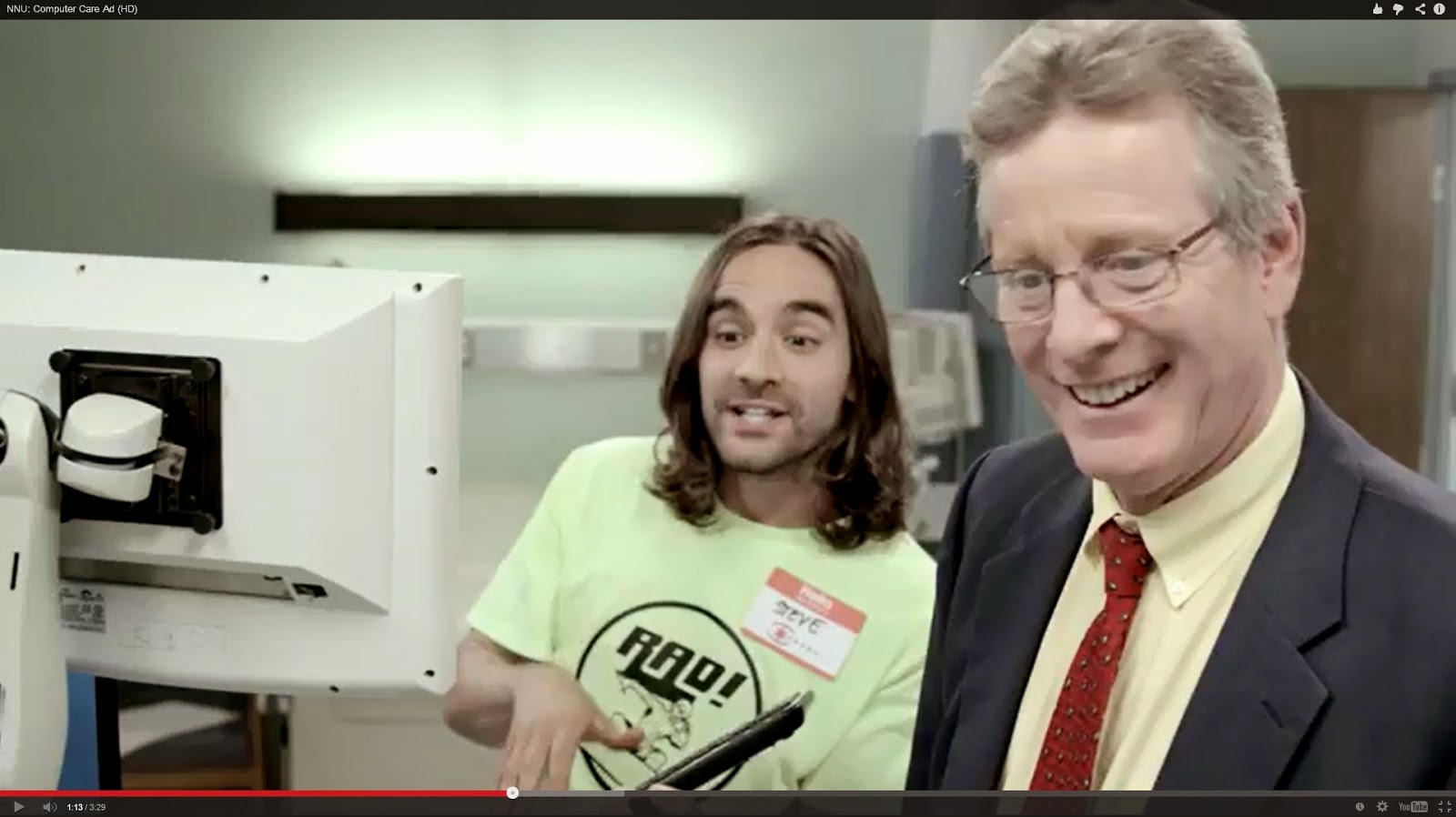
A Nurse's Union, National Nurses United, Takes On Bad Health IT

National Nurses United (http://www.nationalnursesunited.org/), a nurse's union, takes on bad health IT with both satire and seriousness:


Hey dude!  I'm your highly-cost effective computer technician Steve.  Tell me what's hurtin' and I'll program it into Frank, our computerized doctor and nurse replacement. (YouTube video at https://www.youtube.com/watch?feature=player_embedded&v=YthF86QDOXY.)

See their page at http://www.nationalnursesunited.org/site/entry/insist-on-an-rn

I note that nature abhors a vacuum, and since medicine's watchdogs (e.g., FDA), physicians and their organizations, the Medical Informatics community and others who know better have left a deep vacuum over health IT problems, I'm glad unionized nurses have stepped up to the plate.

-- SS

Friday, April 25, 2014

Hypocrisy at the FDA: Let's regulate E-cigarettes ... E-medical records, E-medical ordering and related Bad Health IT? They get a gentleman's pass.

Bad health IT is defined at my Medical Informatics academic site (http://cci.drexel.edu/faculty/ssilverstein/cases/) as follows:

Bad Health IT ("BHIT") is health IT that is ill-suited to purpose, hard to use, unreliable, loses data or provides incorrect data, is difficult and/or prohibitively expensive to customize to the needs of different medical specialists and subspecialists, causes cognitive overload, slows rather than facilitates users, lacks appropriate alerts, creates the need for hypervigilance (i.e., towards avoiding IT-related mishaps) that increases stress, is lacking in security, compromises patient privacy or otherwise demonstrates suboptimal design and/or implementation.

Health IT is unregulated, and Bad Health IT results in patient injuries and deaths.   This is unarguable from the data cited in this post and related posts I've linked to.  The levels of harm are unknown.

At my April 9, 2014 post "FDA on health IT risk:  "We don't know the magnitude of the risk, and what we do know is the tip of the iceberg, but health IT is of 'sufficiently low risk' that we don't need to regulate it" (http://hcrenewal.blogspot.com/2014/04/fda-on-health-it-risk-reckless-or.html) I observed how the FDA bent over backwards to avoid regulating Electronic Medical Records systems and other healthcare IT systems:

To recap that post:

Out of one side of their mouth FDA wrote this:

... products with health management heath IT functions, includes software for health information and data management, medication management, provider order entry, knowledge management, electronic access to clinical results and most clinical decision support software.

Products with health management health IT functions are of sufficiently low risk and thus, [even] if they meet the statutory definition of a medical device, FDA does not intend to focus its oversight on them.

While out of the side of their mouth that was not intended for public viewing, discovered by investigative reporter Fred Schulte, they wrote this:

...In summary, the results of this data review suggest significant clinical implications and public safety issues surrounding Health Information Technology. The most commonly reported H-IT safety issues included wrong patient/wrong data, medication administration issues, clinical data loss/miscalculation, and unforeseen software design issues; all of which have varying impact on the patient’s clinical care and outcome, which included 6 death and 43 injuries. The absence of mandatory reporting enforcement of H-IT safety issues limits the number of relevant MDRs [device reports] and impedes a more comprehensive understanding of the actual problems and implications.
 
FDA is thus claiming "we know what we non-publicly concluded it is not possible to know, and Health IT is not worth regulating ... even in face of dangers we do know" (e.g., see the alarming ECRI Institute data at http://hcrenewal.blogspot.com/2013/02/peering-underneath-icebergs-water-level.html).

Note that everyone who needs medical care (which is. essentially, everyone) is increasingly exposed to these electronic products with health management heath IT functions, against their will and without any informed consent processes.  The only people exposed to E-cigarettes are those who willingly buy and consume them.

With E-cigarettes, however: 

CBS/AP  April 24, 2014 
FDA: Ban sales of electronic cigarettes to minors 

http://www.cbsnews.com/news/fda-ban-sales-of-electronic-cigarettes-to-minors/

WASHINGTON -- The federal government wants to ban sales of electronic cigarettes to minors and require health warning labels and approval for new products under regulations being proposed by the Food and Drug Administration.

Wonderful.  How thoughtful.  (E-cigarettes are plastic or metal tubes, usually the size of a cigarette, that heat a liquid nicotine solution instead of burning tobacco. That creates vapor that users inhale.)

While the proposal being issued Thursday won't immediately mean changes for the popular devices, the move is aimed at eventually taming the fast-growing e-cigarette industry.

The agency said the proposal sets a foundation for regulating the products but the rules don't immediately ban the wide array of flavors of e-cigarettes, curb marketing in places like TV or set product standards.

Any further rules "will have to be grounded in our growing body of knowledge and understanding about the use of e-cigarettes and their potential health risks or public health benefits," Commissioner Dr. Margaret Hamburg said.

(Perhaps the E-cigarette industry hasn't figured out who to pay off yet?)

... "By being able to regulate e-cigarettes, we'll get a lot more information about what's in them, how they're made and we're already studying e-cigarettes in terms of how they're being used and what are their implications for health," Hamburg told CBS News.

"At the present time, when we can't regulate cigarettes, it's like they wild, wild West" she said. "Companies can do anything they want. They can market in ways that they want. ... Unless they make a therapeutic claim that it is a product for actual cessation of nicotine use, we can't regulate them. If they make a therapeutic claim, we can regulate them as a medical product."

The "Wild, wild west" is a perfect descriptor of the health IT market.  And claims of benefits?  How about some 'Words that Work?'  (http://hcrenewal.blogspot.com/2013/10/words-that-work-singing-only-positive.html)

Hamburg stressed to CBS News that, "Until we have the authority to regulate e-cigarettes, we cannot provide the information that the American public wants about the relative risk and safety of these products. ... We cannot put in place certain restrictions that might be appropriate with respect to how the products are made, the kind of flavorings, the kind of marketing, etc. So we see this as really a crucial first step."

The health IT industry has special accommodations in that regard that the E-cigarette company lawyers need to closely examine.
Smokers like e-cigarettes because the nicotine-infused vapor looks like smoke but doesn't contain the thousands of chemicals, tar or odor of regular cigarettes. Some smokers use e-cigarettes as a way to quit smoking tobacco, or to cut down. However, there's not much scientific evidence showing e-cigarettes help smokers quit or smoke less, and it's unclear how safe they are.

It's undeniably unclear how safe clinical IT devices are, either.  The ECRI Institute, for instance, found 171 mishaps in 9 weeks at 36 hospitals voluntarily reported, leaving 8 patients harmed and possibly three of them dead.   (A likely far more than serous problem than GM cars with defective ignitions that killed ~13 in a decade...)   The FDA found many injuries and several deaths in their own self-admitted limited dataset as well.  (See FDA Internal Memo on HIT risk at http://hcrenewal.blogspot.com/2010/08/smoking-gun-internal-fda-memorandum-of.html).

... Companies also will be required to submit applications for premarket review within two years. As long as an e-cigarette maker has submitted the application, the FDA said it will allow the products to stay on the market while they are being reviewed. That would mean companies would have to submit an application for all e-cigarettes now being sold.

There is no premarket review of clinical IT of the types categorized by FDA as "with health management heath IT functions" as above, even if those devices meet the statutory requirements as a medical device that falls under the Food, Drug & Cosmetic Act.  These systems increasingly mediate and regulate every transaction of healthcare.

E-cigarettes, however, are a major concern that are being reviewed in earnest?

Unbelievable.

-- SS

DISCLAIMER:  I neither use tobacco products in any form nor E-cigarettes, never did, and have no conflicts of interest of any kind with either the tobacco or E-cigarette industries.