Showing posts with label healthcare IT dissatisfaction. Show all posts

Tuesday, January 30, 2018

Physicians Harassed by Overwhelming Levels of Messaging From Electronic Medical Records

In yet another example of the clerical overload caused by bad health IT, physicians find themselves drinking from a fire hose through cybernetics.  This, in the field of dermatology, let alone critical care specialties:

Physicians Overwhelmed by Messaging From Electronic Medical Records
MedicalResearch.com Interview with: Matilda W. Nicholas, MD, PhD
Duke Dermatology
January 29, 2018

MedicalResearch.com: What is the background for this study?
Response: I have found many physicians overwhelmed by the electronic messaging feature in Electronic Health Record systems (EHRs). I found there was very little published about this phenomenon, particularly for specialists. So, we set out to take a look at the volume and effect these systems have. 

MedicalResearch.com: What are the main findings?
 Response: We found that, on average, clinicians receive 3.24 messages per patient visit, for an average of about 50 messages per full day of clinic. The number of messages also correlated with poor reported work life balance for dermatologists.


MedicalResearch.com: What should readers take away from your report?
 Response: As previous studies have shown, physicians are spending much more time in non-direct patient care and less time with patients. This is bad for everyone involved. Targeting methods to decrease this burden would be important in improving patient care and physician wellbeing ... We are planning on examining the messages sent directly from patients more closely, hoping to target higher risk patients to decrease post and inter-visit messaging.

As at my Jan. 28, 2018 post "Medical Economics: Highly experienced physicians lost to medicine over bad health IT" at http://hcrenewal.blogspot.com/2018/01/medical-economics-highly-experienced.html and many, many others, cybernetics are proving a distraction from - and actually a deterrent to - the practice of good medicine.

With the increasing outcry of physicians and nurses against EHRs and the oppressive demands the systems place on them, and the burnout these systems cause (see the numerous posts on burnout at query link http://hcrenewal.blogspot.com/search/label/burnout), I'm increasingly of the opinion these systems are not fixable.

There is only so much that can be accomplished with surface changes to user interfaces, without substantive changes to physicians' work expectations. 

The true problem that nobody seems to want to deal with - the proverbial elephant in the living room -  is expectations of clinicians doing oppressive amounts of clerical work, in addition to their patient care responsibilities.

(Note that in this essay I am not addressing other critical drawbacks to this technology such as crashes, lack of security including growing record theft, ransomware attacks on EHR's, and so forth.)

In my view, the only solution to these problems are separation of clinicians from clerical duties (see my August 9, 2016 essay "More on uncoupling clinicians from EHR clerical oppression" at http://hcrenewal.blogspot.com/2016/08/more-on-uncoupling-clinicians-from-ehr_91.html), and the use of data-entry personnel, as I set up in the Invasive Cardiology Clinical Database at Christiana Care Health System in Delaware (http://cci.drexel.edu/faculty/ssilverstein/cases/?loc=cases&sloc=Cardiology%20story) so many years ago. 

Of course this will likely never happen, because it's an expensive labor proposition.

Based upon my EHR forensics/expert witness work since 2010, I also believe physicians can expect no help from the public or the government on this.  The issues seem above the public's heads (with the exception of those injured or killed by bad health IT, who - or whose heirs - seem to learn very fast about the drawbacks), and conflict with the bureaucratic goals for control of medical finance.

Physicians need to take control of their occupations, for there is no help coming from government or the public regarding cybernetic oppression. The only way repair of the profession can happen is through unionization, such as I saw in my work in the public transit industry.

If physicians are unwilling to take that step, then they will have to accept being servants to the bureaucracy, and being endlessly stressed, distracted and harassed by their cybernetic overlords.

-- SS

Thursday, May 18, 2017

Death By A Thousand Clicks: Leading Boston Doctors Decry Electronic Medical Records

Channeling Lyndon Johnson on Walter Cronkite, in clinical medicine, when you've lost Boston (including MGH), you've probably lost the health IT war.

Death By A Thousand Clicks: Leading Boston Doctors Decry Electronic Medical Records
May 12, 2017
By Drs. John Levinson, Bruce H. Price and Vikas Saini
http://www.wbur.org/commonhealth/2017/05/12/boston-electronic-medical-record

It happens every day, in exam rooms across the country, something that would have been unthinkable 20 years ago: Doctors and nurses turn away from their patients and focus their attention elsewhere — on their computer screens.

By the time the doctor can finally turn back to her patient, she will have spent close to half of the appointment serving not the needs of her patient, but of the electronic medical record.

I have observed this myself in my own personal experiences in recent years observing clinicians in situ.  I (unfortunately) have also been on the receiving end of the resultant distractions, via a dead parent, at the very hospital where I did my residency training in pre-HIT days.

Electronic medical records, or EMRs, were supposed to improve the quality, safety and efficiency of health care, and provide instant access to vital patient information.

Instead, EMRs have become the bane of doctors and nurses everywhere. They are the medical equivalent of texting while driving, sucking the soul out of the practice of medicine while failing to improve care.

"Texting while driving" is, in fact, an excellent metaphor.  The practice of medicine is often a highly-demanding activity, cognitively speaking, just as driving is.  Slip up even for a moment, and accidents and catastrophe can occur.
To fix them, hospital administrators and clinicians need to work together to demand better products from EMR manufacturers and to urge government to relax several provisions of the HITECH Act, the 2009 law that spawned many of the problems with EMRs.

I do not think this is feasible, nor do I think it would solve the problems.  More on that below.

How did technology that has increased efficiency in every other industry become such a drag on health care? For starters, people who take care of patients did not design or choose these systems. They were foisted upon us.

Doctors and nurses know that good diagnosis and treatment requires listening attentively to their patients. They spend years learning to parse the clues that patients offer, both the physiological and personal, in order to provide the right care.

The sound of medicine is not the click of a mouse. It is the human voice. Let’s bring it back.

To do this well takes time and undivided attention.

"Undivided attention to the patient" and "use of health IT" under the current paradigms are incompatible.  The terms do not belong in the same sentence.  Again, more on that below.

... Instead of making this easier, most EMRs create extra work. A lot of extra work, thanks to endless prompts with multiple choice answers that hardly ever fit the facts and that demand click after click to get anything done.

Want to order a simple test? That requires getting through multiple prompts. Need to write a prescription -- an exercise that used to take less than 15 seconds? Another set of clicks.

Template madness is the coin of the realm.


Four screens of hundreds, from just one EHR, of many EHRs that a clinician might need to use in practice of medicine.

Typing, filing, mailing results and placing referrals all used to be done by assistants. Now, EMRs put that burden on clinicians, and we must do it during office visits, or “encounters,” as EMRs call them. And when the wrong button is clicked, the wrong test or drug is ordered, or it does not go through at all, delaying medical care.

It’s death by a thousand clicks, and it happens every day.

Another excellent metaphor, a derivation of "death by a thousand cuts."  However, in this case, it is not just referring to death of the ability to maintain medical practice and retain sanity (and health of the practitioner), but also injury and death of patients.

We are frustrated by EMRs because they pull us away from our patients. We are driven mad by the fact that EMRs in different locations do not talk to each other. And we think it’s just wrong that much of the EMR’s busywork is about optimizing billing for the hospital.

The lack of interoperability is likely protective against, in effect, mass copy-and-paste on a grand scale through importation of a chart from one EHR to another, resulting in propagation of errors.  In any case, interoperability needs to take a back seat to operability (usability).

Who is to blame? Start with EMR manufacturers, who lobbied Congress to require every hospital and doctor’s office to install an EMR system; hospital administrators who bought technology that conveniently pushed billing duties onto doctors and nurses; and federal regulators, who imposed on EMRs numerous quality metric requirements that do nothing to improve care.

Everyone in healthcare is to blame, including clinicians who DID NOT SPEAK OUT until obvious issues crated the terrible state clinicians find themselves in now.

We do not want to go backward. We believe that computing is essential to the future of medicine. We simply want all EMRs to live up to their promise of improving care and making patient information readily available.

I've been calling the problems out for close to two decades now.

The issue becomes:  what to do about it?

My area of Medical Informatics research in the early 1990s was to move away from the traditional GUI paradigm of menus, widgets, control buttons, etc to explore novel (and menu-free) paradigms of EHR-based data content visualization, navigation and querying.  The commercial companies, when shown this, had no interest in even considering such ideas.

Other avenues to enhance the traditional GUI interface - e.g., AI-based "wizards" of one sort or another that anticipated likely down-the-line choices from currently entered data and presented the choices to the user, better-designed EHR roadmaps and/or AI based on data entry to-the-moment to  allow simpler and less time-consuming navigation, etc. - all proved not very helpful due to the complexity of the domain, not to mention its specialties and subspecialties.  This experience informed my decision down the line to move to specialized and malleable paper forms for the clinicians, and data entry clerical teams, for high risk and/or high volume procedural or critical care areas such as invasive cardiology, cardiac surgery and the ED.

See my Aug. 2016 post "More on uncoupling clinicians from EHR clerical oppression" at http://hcrenewal.blogspot.com/2016/08/more-on-uncoupling-clinicians-from-ehr_91.html for a specific, highly successful example.

It is my belief that the "traditional" model - GUI-based EHRs with the typical paradigms, and clinicians doing the bulk of the data entry that itself is bloated relative to the actual clinical need, and tying all human-computer interaction to a computer screen roughly at the resolution of one or two legal-sized pieces of paper, can never be improved to the point of not impairing the clinical workday.

The entire health IT enterprise needs to be rebooted (rethought), especially regarding roles, workflow, and most especially the "data capture load per clinician".

When I was writing about EHR issues in the late 1990s and into the 2000s, I was called a Luddite and alarmist (or worse, e.g., see my 2010 posts "The Dangers of Critical Thinking in A Politicized, Irrational Culture" at http://hcrenewal.blogspot.com/2010/09/dangers-of-critical-thinking-in.html and "More on Perversity in the Healthcare IT World: Is Meditech Employing Sockpuppets?" at http://hcrenewal.blogspot.com/2010/01/more-on-perversity-in-hit-world.html).

It appears I was correct.

My issuing the prediction that the current model of health IT is irreparably broken (or, said differently, that the health IT experiment - and it has been an experiment - under its current paradigms has failed), and needs a top-to-bottom rethinking, will probably be taken the same way.

Until it isn't.

-- SS

Saturday, May 06, 2017

New HHS Secretary, rather than singing unabashed praise for EMRs like his predecessors, states the obvious. However, the "solutions" are the usual boilerplate.

In the past, politicians on both sides of the aisle have generally sung unfettered and uncritical praise for electronic medical records and other health IT systems.

Perhaps letters like this one from Jan. 2015, from near 40 major US medical societies bemoaning the injurious effects of health IT on medical practice, have finally had an effect:  http://mb.cision.com/Public/373/9710840/9053557230dbb768.pdf


First page preview of Jan. 2015 medical societies complaint letter to HHS about health IT.  Full letter at http://mb.cision.com/Public/373/9710840/9053557230dbb768.pdf


In any case, this recent article caught me by surprise:


HHS Secretary Price promises reduced health IT burden for physicians
April 27, 2017
Gregory Twachtman
Frontline Medical News
http://www.mdedge.com/acssurgerynews/article/136747/business-medicine/hhs-secretary-price-promises-reduced-health-it

– Reducing IT burden for doctors and fostering interoperability are two top tech priorities for Health and Human Services Secretary Tom Price, MD.

"We simply have to do a better job of reducing the burden of health IT on physicians and all health care providers,” Dr. Price said April 27 at Health Datapalooza, an annual conference on health data transparency. “The promise of big data and health information technology is so great and absolutely remarkable but we must not, we cannot continue to get this wrong.”

The burdens have become so onerous that the new HHS secretary made these statements:

EHR requirements are causing some physicians to retire too early, Dr. Tom Price said at Health Datapolooza.
Dr. Price said that the burden being placed on physicians is causing many to leave practice way too early. He noted that his grandfather retired from practice at age 94 and his father retired in his early 80s.

“Now we are seeing physicians leaving the practice of medicine when they are 60 or 55,” he said. “Many of my colleagues, my personal friends who have been practicing, right now they are looking for the exit doors. They are trying to figure out how to get out of practicing medicine and I think it is incredibly important for us as a society to step back and ask, why?”

A significant factor is the shift to electronic health records, which has caused doctors to spend much more time looking at screens and feeling more like data entry clerks than health care providers, he said.

“I know that we have lost more than one physician to retirement because of the kinds of burdens that have been placed on a lot of them and that simply ought to be unacceptable to us,” he said. “You think of the intellectual capital that has been lost by this nation because of the kinds of burdens that clinicians have seen.”

First, an aside on the term "Datapalooza."   Such an injudicious, "let's party" term as "datapalooza" reflects in my opinion the irrational exuberance that has characterized health IT for decades and led to the dilemma faced by physicians in 2017.  I've mentioned this before.  At my May 10, 2012 post "ONC's 'Health Data Palooza' - A Title of Exceptionally Bad Taste" at https://hcrenewal.blogspot.com/2012/05/oncs-health-data-palooza-title-of.html, I observed:

... This title for a government-sponsored meeting is bizarre and tasteless in my opinion.  What is deemed by ONC to be the major source of this data?  Health IT. 

"Palooza?" 

From Urban Dictionary: 

Palooza - http://www.urbandictionary.com/define.php?term=palooza 

An all-out crazy party; partying at one place with a ton of people like there's no tomorrow; The art of throwing a very drunken extravagant party with a plethora of friends

Also, the Secretary reiterates the other hyper-enthusiast-promoted line:

... The promise of big data and health information technology is so great and absolutely remarkable

This is the decidedly un-sober "revolutionizing medicine" claim I've been hearing about health IT for the past several decades.  As I observed at my August 2016 post at http://hcrenewal.blogspot.com/2016/08/ioannidis-what-happens-when.html, Ioannidis et al. wrote about this phenomenon more eloquently than I could regarding Big Data and biomedicine:

What Happens When Underperforming Big Ideas in Research Become Entrenched?
Michael J. Joyner, MD1; Nigel Paneth, MD, MPH2; John P. A. Ioannidis, MD, DSc3
JAMA. Published online July 28, 2016. doi:10.1001/jama.2016.11076
http://jama.jamanetwork.com/article.aspx?articleid=2541515

For several decades now the biomedical research community has pursued a narrative positing that a combination of ever-deeper knowledge of subcellular biology, especially genetics, coupled with information technology will lead to transformative improvements in health care and human health. In this Viewpoint, we provide evidence for the extraordinary dominance of this narrative in biomedical funding and journal publications; discuss several prominent themes embedded in the narrative to show that this approach has largely failed; and propose a wholesale reevaluation of the way forward in biomedical research 

and this:

... The financial and clinical benefits predicted from shifting to EHRs have also largely failed to materialize because of difficulties in interoperability, poor quality, and accuracy of the collected information; cost overruns associated with installation and operation of EHRs at many institutions; and ongoing privacy and security concerns that further increase operational costs.

Those things said:

Regarding Dr. Price's statement that "We simply have to do a better job of reducing the burden of health IT on physicians and all health care providers", I find the statement remarkable coming from the top echelon of government.

It's about time, I opine.

Still more time is needed, however, before the government and organized medicine truly understand health IT enthusiast culture.  One might wonder if Dr. Price read my Aug. 9, 2016 post "More on uncoupling clinicians from EHR clerical oppression" at http://hcrenewal.blogspot.com/2016/08/more-on-uncoupling-clinicians-from-ehr_91.html - that is, until one reads his proposed solutions:

... He challenged the health IT professionals at the meeting to make their products more user friendly.

“We will work on reducing the burdens at the federal level, but we also need clinicians and IT folks on the ground to help make certain that technology implementation is done in a way that it enhances usability and increases efficiency,” Dr. Price said.

This assumes that complex major information systems such as EHR's can be made significantly more "usable", considering the constraints of time and the cognitive burdens such systems place on already-taxed clinicians

As I have pointed out, these "EHRs" are really complex command-and-control systems with dozens of component systems:


The term "EHR"/"EMR" is a misleading anachronism, no longer reflecting a medical file cabinet replacement but a far larger, complex amalgam of information systems.


I do not believe these systems really can be made less burdensome to clinicians to a major degree, no matter how clever the user interaction design.  The user manuals to the best of these systems are hundreds of pages long, and many clinicians user more than one system.  Further, paper will always be far simpler to use than computers, and no information system in a complex field like medicine will ever duplicate that ease-of-use.

The real-world solution to decrease clerical burden on busy and overtaxed clinicians is either to significantly decrease their patient load (unlikely to occur), or to decrease the amount of time they have to spend at computers and the amount of data they are called upon to enter per capita.  That solution cannot be accomplished without help from a significant number of - no surprise here - clerical personnel, for data entry, data abstraction and related mundane tasks.

... [Dr. Price] also called for true interoperability, a common goal that has persisted since electronic health records were mandated under the HITECH Act but remains an elusive target.

“This has always been the goal and it just seems so simple,” he said. “Somehow something has happened between the idea of interoperability and now that has made it so much more challenging.”

Achieving interoperability among many complex information systems that contain the massively complex datasets of biomedicine, a terminology set containing a massive number of unique concepts and terms, with millions of synonyms and subtleties (cf.:  Unified Medical Language System, https://www.nlm.nih.gov/research/umls/) is NOT so simple:

Scott Adams expressed the misconception here succinctly:

ANYTHING YOU DON’T UNDERSTAND IS EASY TO DO
ExampIe: If you have the right tools, how hard could it be to generate nuclear fission at home?

Further, and even worse:

It is my great concern that, should significant inter-EHR system interoperability be achieved, wholesale import of patient data from one system to the next could (and likely would) encourage 'laziness', e.g., uncritical acceptance of the incoming data as correct.   The propagation of inaccuracies and errors (already a significant issue with intra-system "cut and paste" as one example), would more readily propagate from one clinician and/or facility to another. 

The repeat history-taking and fresh rewriting of a new chart regarding new encounters serves a corrective function that could be bypassed through seamless health IT "interoperability."

As I've written at this blog numerous times, the issue of basic operability is more important towards practical use of EHRs in the real-world care of individual patients (which I consider the heart and soul of medicine) than interoperability.

... He placed that fault on current federal regulation around interoperability and pledged to create an environment that reduces regulatory roadblocks and allows the technology sector to innovate and foster the free flow of data.

This idea is dead in the water if history is any lesson.  The lack of any meaningful regulation of the health IT industry over the past several decades, that is, the unprecedented regulatory accommodation afforded the health IT sector, certainly did not promote meaningful innovation in the technology or in interoperability.   The primary driver and business equation is "proprietary" == locked-in customers.

“From my perspective it seems that what we ought to be doing is deciding the rules of the road,” Dr. Price said. “We are going to drive on the right side. We are going to stop at the red light. This is the language we are going to do. This is what a triangular sign looks like, as opposed to stipulating every single dot... all the way down the line.”

Dr. Price has taken the first (remarkable) step in calling out the severe impact of the burdens placed on clinicians by current health IT systems and practices.

What he and his advisors have not yet done is truly think through the solutions critically.

That needs to occur, for the proposed solutions are no "solution" at all.  They are merely more of the same muddled thinking and hyper-enthusiastic boilerplate that got clinicians into the cybernetic mess they are in to begin with.

-- SS

Friday, July 08, 2016

Physicians go flatline on EHR enthusiasm

In a new study, physicians' enthusiasm levels for EHR's seem to resemble this EKG:


Do physicians really experience a satisfaction 'J-curve' with EHRs?
Max Green 
July 6, 2016 
http://www.beckershospitalreview.com/healthcare-information-technology/do-physicians-really-experience-a-satisfaction-j-curve-with-ehrs.html 

There's a school of thought about EHR adoption that suggests physicians experience an initial decrease in their positive perceptions of the technology, but over time those levels creep back up and ultimately surpass their pre-implementation perceptions. But does that J-curve actually exists for EHRs? A new study in the Journal of the American Medical Informatics Association says no. 

That "school of thought" must be from U.B.H. (Univ. of Blind Hyperenthusiasts) and O.U. (Ostrich University).

"[W]e did not find evidence for a J-curve pattern with respect to positive perceptions eventually exceeding baseline measures," the authors concluded. "Some measures followed a U-curve (returned to baseline), or flatlined, while most followed an L-curve (fell and remained below baseline)."

Translation: doctors hate the technology in its present form.

The study is based on a prospective longitudinal survey of Ann Arbor-based University of Michigan Health System physicians over the course of two years, from when they dropped their homegrown CareWeb EHR, for Epic's. Although all physicians received training on the new system and the system "invested substantial resources developing customized content," according to the paper, the only significant increase over baseline perception after two years of the new EHR was for documenting while in the exam room with patients. 

Surely, that accomplishment is worth the investment of hundreds of millions of dollars ...

"Future research is warranted to determine if positive perceptions eventually surpass baseline, and what interventions can help physicians use EHRs more effectively," the authors concluded.

The answer is "likely not."

In fact, the results of the new study are not surprising considering the not-so-glowing reviews of EHRs forwarded on to HHS in Jan. 2015 by the list of medical societies below (see link to the letter at my Jan. 28, 2015 post "Meaningful Use Not So Meaningful: Multiple medical specialty societies now go on record about hazards of EHR misdirection, mismanagement and sloppy hospital computing" at http://hcrenewal.blogspot.com/2015/01/meaningful-use-not-so-meaningul.html):


American Medical Association
AMDA – The Society for Post-Acute and Long-Term Care Medicine
American Academy of Allergy, Asthma and Immunology
American Academy of Dermatology Association
American Academy of Facial Plastic
American Academy of Family Physicians
American Academy of Home Care Medicine American Academy of Neurology
American Academy of Ophthalmology
American Academy of Otolaryngology—Head and Neck Surgery
American Academy of Physical Medicine and Rehabilitation
American Association of Clinical Endocrinologists
American Association of Neurological Surgeons
American Association of Orthopaedic Surgeons
American College of Allergy, Asthma and Immunology
American College of Emergency Physicians
American College of Osteopathic Surgeons
American College of Physicians
American College of Surgeons
American Congress of Obstetricians and Gynecologists
American Osteopathic Association
American Society for Radiology and Oncology
American Society of Anesthesiologists
American Society of Cataract and Refractive Surgery and Reconstructive Surgery
American Society of Clinical Oncology
American Society of Nephrology
College of Healthcare Information Management Executives
Congress of Neurological Surgeons
Heart Rhythm Society
Joint Council on Allergy, Asthma and Immunology
Medical Group Management Association
National Association of Spine Specialists
Renal Physicians Association
Society for Cardiovascular Angiography and Interventions
Society for Vascular Surgery

But, as the EHR pollyannas say, it'll all be better in ver. 2.0.

-- SS

Thursday, June 23, 2016

New AMA President Andy Gurman, MD on EHRs: " I don't have one, and no one can make me use one."

The love-fest with EHRs continues, to the great chagrin of the believers in fairies, unicorns and cybernetic utopia.

Andy Gurman, MD, Takes Reins as AMA President
Jun 17, 2016
Gale Scott, HCPLive
http://www.hcplive.com/medical-news/andy-gurman-md-takes-reins-as-ama-president

The American Medical Association’s new president, Andrew W. Gurman, MD, known for his affability and quick wit, is not one to seek out controversy.

In an interview before being sworn in this week as the AMA’s annual meeting in Chicago, IL, Gurman said he has no agenda for his tenure at the top of the organization.

Considering the mass hatred of EHRs by physicians (and nurses), the issue of EHR-related harms, compromised patient data security, physician scorecards, and other noxious issues, maybe he should have an agenda.  E.g., see my Jan. 28, 2015 post "Meaningful use not so meaningful: Multiple medical specialty societies now go on record about hazards of EHR misdirection, mismanagement and sloppy hospital computing" at http://hcrenewal.blogspot.com/2015/01/meaningful-use-not-so-meaningul.html.

... Though physicians’ anger over the frustration of using existing electronic health records was a major topic of conversation at the [annual AMA] meeting, Gurman said he had little to add other than no one could make him use one.

 “I don’t have an EHR,” he said. Due to the fact that he runs his own practice he found it easier and cheaper just to forgo the enhanced payments he would get under the federal “meaningful use” regulations for converting to electronic records. “I just take the penalties,” he said.

Not every physician can afford the time sink most EHRs represent, and the increasing penalties for non-users, unfortunately.

Perhaps on the AMA agenda should be a return to sense regarding physician and nurse documentation, with significant reduction in their clerical burden for starters.

-- SS

Tuesday, June 07, 2016

NY Times/Steve Lohr asks "Why the Economic Payoff From Technology Is So Elusive." The answer in medicine is obvious.

In a June 5, 2016 article, New York Times reporter Steve Lohr (http://topics.nytimes.com/top/reference/timestopics/people/l/steve_lohr/index.html), who reports on technology, business and economics, asked the following question:

Why the Economic Payoff From Technology Is So Elusive
New York Times, Business Day
By STEVE LOHR
JUNE 5, 2016
http://www.nytimes.com/2016/06/06/business/why-the-economic-payoff-from-technology-is-so-elusive.html

Your smartphone allows you to get almost instantaneous answers to the most obscure questions. It also allows you to waste hours scrolling through Facebook or looking for the latest deals on Amazon.  More powerful computing systems can predict the weather better than any meteorologist or beat human champions in complex board games like chess.

But for several years, economists have asked why all that technical wizardry seems to be having so little impact on the economy. The issue surfaced again recently, when the government reported disappointingly slow growth and continuing stagnation in productivity. The rate of productivity growth from 2011 to 2015 was the slowest since the five-year period ending in 1982.

Healthcare becomes the gravamen of the article:

One place to look at this disconnect is in the doctor’s office. Dr. Peter Sutherland, a family physician in Tennessee, made the shift to computerized patient records from paper in the last few years. There are benefits to using electronic health records, Dr. Sutherland says, but grappling with the software and new reporting requirements has slowed him down. He sees fewer patients, and his income has slipped.

Unfortunately, the advisors who helped him with the article may have provided incomplete information:

... “The government funding has made a huge difference,” said Dr. Ashish Jha, a professor at the Harvard School of Public Health. “But we’re seeing little evidence so far that all this technology has had much effect on quality and costs.”

In the face of, among many others, a stunning letter from 40 medical societies to HHS in 2015 that the technology is unfit for purpose (http://mb.cision.com/Public/373/9710840/9053557230dbb768.pdf), known and hair-raising defects (http://hcrenewal.blogspot.com/2011/01/maude-and-hit-risk-mother-mary-what-in.html), and many other complaints from physicians and nurses (e.g., http://hcrenewal.blogspot.com/2013/11/another-survey-on-ehrs-affinity-medical.html, http://hcrenewal.blogspot.com/2013/07/rns-say-sutters-new-electronic-system.html, query link http://hcrenewal.blogspot.com/search/label/glitch as just a few examples), such a statement is anserine.

Why would anyone expect (good) effects on "quality and costs" of healthcare when the technology is so unfit for purpose in design and implementation that it has alienated most of its users?  

I've written previously about Jha's views in a May 27,  2009 post "Harvard's EMR Justification: We Just Have To Do Something" (http://hcrenewal.blogspot.com/2009/05/harvards-emr-justification-we-just-have_27.html):

 ... "I'm not suggesting EHR is going to be a panacea, but the one thing that is absolutely true is there is nothing else out there now that has any more political appeal," Jha says. "Everybody agrees, whether you are a conservative, moderate, or liberal, that we have to do something about healthcare. So the one place where we can all come to agreement is we have to do something about electronic records."

I do not think "political appeal" is a good justification for a multi-billion dollar cybernetic experiment in medicine, where the risks of the technology are considerable and where basic healthcare needs are not being well met among the poor and underprivileged.

Former ONC Chair David Brailer is quoted:

“People confuse information automation with creating the kind of work environment where productivity and creativity can flourish,” said Dr. David J. Brailer, who was the national health technology coordinator in the George W. Bush administration. “And so little has gone into changing work so far.”

Brailer was little better than Jha, and moves the goalposts with a type of circular logic.  He appears to be saying that technology that will revolutionize medicine can't work until we change how things are done in medicine so the technology can revolutionize medicine. 

The article then quotes one Tennessee physician, a Dr. Sutherland, who is "happy" to accept bad health IT, a resultant pay cut, and increased work:

... Today, Dr. Sutherland’s personal income and the medical group’s revenue are about 8 percent below where they were four years ago. But in 2015, both his earnings and the revenue of Healthstar, which employs 350 people in 10 clinics, increased slightly, by nearly 3 percent from 2014.

... Dr. Sutherland bemoans the countless data fields he must fill in to comply with government-mandated reporting rules, and he concedes that some of his colleagues hate using digital records. Yet Dr. Sutherland is no hater. Despite the extra work the new technology has created and even though it has not yet had the expected financial payoff, he thinks it has helped him provide better information to patients.

He values being able to tap the screen to look up potentially harmful drug interactions and to teach patients during visits. He can, for example, quickly create charts to show diabetes patients how they are progressing with treatment plans, managing blood glucose levels and weight loss.

He is working harder, Dr. Sutherland says, but he believes he is a better doctor. Blunt measures of productivity, he added, aren’t everything. “My patients are better served,” he said. “And I’m happier.”

While being able to provide fancy charts and check drug-drug interactions (for which a massive and expensive EHR is certainly not needed; a PDA will suffice) is fine.

However, anyone who gladly accepts a pay cut, and inconvenience, and harder work due to bad health IT, and is a happy camper with that state of affairs, either suffers from the Stockholm syndrome or has a lot of discretionary income and free time to spare that many clinicians do not.  

The article fails to mention the hundreds of thousands of other US docs and others in other lands (e.g., http://hcrenewal.blogspot.com/2016/05/hit-mayhem-canadian-style-nanaimo.html) who aren't happy at all with health IT as it is today.  

---------------------------------------

I sent this email to Mr. Lohr.

From: S Silverstein
To:Steve Lohr 
Date: Tue, Jun 7, 2016 at 10:02 AM
Subject: Re: Why the Economic Payoff From Technology Is So Elusive

Dear Mr. Lohr,

In medicine, the answer to this question is straightforward.  I don't know if Ashish Jha brought this to your attention, or if he himself is aware of it.

This letter from nearly 40 different medical societies to HHS about bad health IT is specific about how bad the current health IT is:


You should be aware of the letter's contents.  I've also attached it to this email.

In academic Medical Informatics, such matters are often ignored, as they run contrary to the narrative that IT will "revolutionize medicine"; I know, as I was Yale faculty in Medical Informatics myself. 

The assumption in academic circles and in the Administration (unfortunately) is that "all health IT is good health IT." 

Unfortunately, it is not.  From my own site "Contemporary Issues in Medical Informatics: Good Health IT, Bad Health IT, and Common Examples of Healthcare IT Difficulties" at http://cci.drexel.edu/faculty/ssilverstein/cases/ :

Definitions authored by myself and Australian informatics expert Dr. Jon Patrick:


Good Health IT ("GHIT") is defined as IT that provides a good user experience, enhances cognitive function, puts essential information as effortlessly as possible into the physician’s hands, can be easily, substantively and cost-effectively customized to the needs of medical specialists and subspecialists, keeps eHealth information secure, protects patient privacy and facilitates better practice of medicine and better outcomes. 

Bad Health IT ("BHIT") is defined as IT that is ill-suited to purpose, hard to use, unreliable, loses data or provides incorrect data, is difficult and/or prohibitively expensive to customize to the needs of different medical specialists and subspecialists, causes cognitive overload, slows rather than facilitates users, lacks appropriate alerts, creates the need for hypervigilance (i.e., towards avoiding IT-related mishaps) that increases stress, is lacking in security, is lacking in evidentiary soundness, compromises patient privacy or otherwise demonstrates suboptimal design and/or implementation. 

It comes as no surprise not to find productivity gains, but instead hundreds of thousands of angry physicians (and nurses), when health IT is mostly bad IT.

The health IT industry itself needs serious remediation before its products will be a boon to medicine.

Sincerely,
Scot Silverstein, MD
Drexel University, Philadelphia


p.s. I have not even broached the matter of health IT patient harms. 

Patients are being harmed and dying of bad health IT.  See for instance the CRICO insurance report at http://www.cci.drexel.edu/faculty/ssilverstein/PSQH_MalpractClaimsAnalyConfirRisksEHR.pdf
 
---------------------------------------  

I will add an addendum if I receive a reply.

-- SS

Wednesday, February 24, 2016

At least former ONC chair Blumenthal now says "health IT can [even] cause safety issues." Other than that, it's unicorns and fairies in the Harvard Business Review.

The truth about healthcare IT, that it is perilously insecure, and is causing clinician despair and patient harm, is increasingly becoming mainstream. 

For example, seen at the eclectic, widely read, multi-author website of Beauchamp Brogan Distinguished Professor of Law at the University if Tennessee Glenn Reynolds, Instapundit (http://pjmedia.com/instapundit/):

REMEMBER THE HEALTHCARE.GOV LAUNCH? Apparently so did some hackers:

“To improve the quality of our health care while lowering its cost, we will make the immediate investments necessary to ensure that, within five years, all of America’s medical records are computerized,” President Obama said. “This will cut waste, eliminate red tape and reduce the need to repeat expensive medical tests.”  While the shift Obama and many others pushed may have improved care, electronic medical records led to quite the unique hostage situation in Los Angeles this week. There, a hospital fell prey to a cyberattack — and the hospital has escaped its plight by paying hackers a $17,000 ransom.

Government mandates and electronic security don’t seem to be a very good mix.
Posted at by Stephen Green on Feb 18, 2016 at 7:31 am Link

and this:

MY USA TODAY COLUMN: Futuristic Data Security With A Pen And A Pad. “If I were running an intelligence agency, I’d have all my important stuff done in handwriting or on mechanical typewriters (the old kind that type over the same fabric ribbon multiple times) and distributed in sealed envelopes. If I were setting up a voting system, I’d use paper ballots instead of electronic voting machines. And if I were running a hospital, I’d seriously consider doing everything on paper."

Posted at by Glenn Reynolds on Feb 22, 2016 at 1:21 pm Link


and this:

YES. NEXT QUESTION: Are Mandatory Electronic Medical Records Causing Doctor Burnout?

Posted at by Sarah Hoyt on Dec 17, 2015 at 4:39 am Link

However, former ONC chair David Blumenthal (now president of the Commonwealth Fund) apparently hasn't received the message.  He and a colleague wrote the following in the Harvard Business Review.


Speeding Up the Digitization of American Health Care
https://hbr.org/2016/02/speeding-up-the-digitization-of-american-health-care 
David Blumenthal
Aneesh Chopra
February 22, 2016

No more of those infuriating forms to fill out at doctors’ offices: the information is all in the computer. Doctors and hospitals don’t repeat tests you’ve had someplace else: they’re all in the computer. All your caretakers know exactly what medicines you’re on and what you’re allergic to: that’s in the computer. When your elderly mother moves from a hospital to a rehabilitation center, the nurses and doctors there know all about her before she arrives: all in the computer.

The usual utopian trope, and as usual it ignores the self-corrective effects of being asked to repeat information that would otherwise be taken as fact from a computer, which can and does propagate errors (which can and does have deadly effects).

These and many other feats of information management will soon be routine in the United States. Indeed, in some places they are already happening. Our health system is undergoing a digital revolution that will profoundly affect the health care of Americans.

"Soon" has been the mantra of the zealots since about 1950.  Further, the assumption in such articles is that the effects are all beneficent ("profoundly affect" means "in good ways only"), and the results are quite mixed on that score.

Many providers and policy-makers tend to see these issues as technical failings of the electronic records that have been recently been adopted with federal support. This has caused some critics to say that the federal investment – estimated at $31 billion over 10 years – is not paying off.

But this diagnosis is only partly correct. Underlying the challenges facing the digital health revolution are economic and social issues that must be addressed if the potential value of electronic records is to be realized.

Aside from the conflict of interest of such passages being written by a person who contributed to those tens of billions spent, in fact, the federal investment has largely been a huge waste for healthcare and a huge boon for the IT industry, disenfranchising the medical community (including physicians and nurses) and creating mayhem for patient care, e.g., http://hcrenewal.blogspot.com/2013/07/candid-nurse-opinions-on-ehrs-at.html and http://hcrenewal.blogspot.com/2013/11/another-survey-on-ehrs-affinity-medical.html).

I can also add that the "economic and social issues that must be addressed" were reasonably understood and needed to be addressed before the likes of Blumenthal and ONC put the cart before the horse, "ready, fire, aim"-style on nationsl rollout of health IT.  See my July 2010 post "Meaningful Use Final Rule: Have the Administration and ONC Put the Cart Before the Horse on Health IT?" , my Oct . 2010 post "Cart before the horse, again: IOM to study HIT patient safety for ONC; should HITECH be repealed?" and my June 5, 2012 post "Cart Before the Horse, Part 3: AHRQ's 'Health IT Hazard Manager'".

Further -

Some history on the issue of risk (this blog has a long memory):

Mr. Blumenthal, Feb. 22, 2016, in the new HBR article:

"... some electronic health records are complex and difficult to use. This is frustrating for doctors and nurses, slows them down, and can even cause safety issues."

Mr. Blumenthal, April 30, 2010:

http://www.massdevice.com/news/blumenthal-evidence-adverse-events-with-emrs-anecdotal-and-fragmented

http://hcrenewal.blogspot.com/2010/05/david-blumenthal-on-health-it-safety.html

... Blumenthal said that although an advisory committee concluded that more information was necessary, he called the evidence of the reports “anecdotal and fragmented” at best ... [Blumenthal's] department is confident that its mission remains unchanged in trying to push all healthcare establishments to adopt EMRs as a standard practice. "The [ONC] committee [investigating FDA reports of HIT endangerment] said that nothing it had found would give them any pause that a policy of introducing EMR's could impede patient safety," he said.

(Ironically and tragically, just weeks later, on May 19, 2010 my mother was severely injured and later died as a result of a dangerously faulty EHR.)

Mr. Blumenthal's views on risk of 2010 as ONC chair represent either deliberate mistruths or ignorance.  Both of those traits tend to be long term, so why should any physician believe the views he expresses in the Harvard Business Review in 2016?

I grant that the views of 2016 in the new article are somewhat more in line with reality, but with significant faults including but not limited to:

1) Since the magnitude of the "safety issues" that health IT can "even" cause are unknown (best estimates are from the ECRI Deep Dive study, which are alarming as at http://healthleadersmedia.com/print/index.cfm?content_id=290834&topic=TEC), it is reckless at best to promote the continued rapid expansion of this technology.

2) On causality, Mr. Blumenthal's views are either erroneous or deliberately misdirect to blame the "health care markets":

"If health care markets functioned well in the U.S, HITECH would have been unnecessary. The industry would have wired itself like our financial, travel, and retail sectors."

Mr. Blumenthal fails to realize, still, the primary reason why healthcare practitioners have resisted computerization: bad health IT.

http://cci.drexel.edu/faculty/ssilverstein/cases/

Bad Health IT ("BHIT") is defined as IT that is ill-suited to purpose, hard to use, unreliable, loses data or provides incorrect data, is difficult and/or prohibitively expensive to customize to the needs of different medical specialists and subspecialists, causes cognitive overload, slows rather than facilitates users, lacks appropriate alerts, creates the need for hypervigilance (i.e., towards avoiding IT-related mishaps) that increases stress, is lacking in security, compromises patient privacy, promotes evidentiary non-trustworthiness, or otherwise demonstrates suboptimal design and/or implementation. 

The Jan. 2015 letter to HHS from about 40 medical societies was clear on these issues:    http://mb.cision.com/Public/373/9710840/9053557230dbb768.pdf

The health IT industry needs to provide worthwhile products before they are shoved down physicians' and patient's throats.

Not to mention the outright peril such systems place patients under:

Feb. 18, 2016
Hollywood Presbyterian Medical Center: Negligent hospital IT leaders allow hacker invasion that cripples EHRs, disrupts clinicians ... but patient safety and confidentiality not compromised
http://hcrenewal.blogspot.com/2016/02/hollywood-presbyterian-medical-center.html
Forbes Feb. 23, 2016:
White Hat Hackers Hit 12 American Hospitals To Prove Patient Life 'Extremely Vulnerable'
http://www.forbes.com/sites/thomasbrewster/2016/02/23/hackers-tear-hospitals-apart/#1b049f9c40d7

Then this statement is made:

Patients tend to be loyal to doctors and hospitals at least in part because that’s where they’re known – that’s where their records reside. If that information can travel to another hospital or doctor at the push of a button, patients can more easily leave current providers behind. That’s not good for business.

That's risible.  Patients don't hang around care they don't like because they can't "push a button" to transfer their records.  In fact, if anything, it's an impediment to cost-cutters that it's not easy for bureaucrats to force patients to go to the cheapest "provider" due to records "stuck" at one office or organization. 

Clinicians have very clearly stated their reasons for hating health IT.  See the Medical Societies letter linked above, for example.  There's no need to make up nonsensical reasons, such as doctors and hospitals holding patients "captive" through their records.

And as for vendors, if you can move information from one vendor system to another, providers can switch out or build upon records more easily in search of a better product. That’s lost revenue for the company.

On that point I am in agreement.

But technical fixes and better records won’t be enough. We need incentives that reward quality and safety improvement and cost reduction.

Not mentioned is reasonable regulation regarding compromised safety, for which "incentives" alone are insufficient.

And we need penalties for providers and vendors that slow-walk the digital revolution to protect their economic interests.

These words are totalitarian.  Responses to glaringly obvious adverse consequences, such as protecting patients from cybernetic harm and the ability to practice good medicine without distraction and burnout don't seem to count.  All that matters is the "revolution."

If we make the market for good health care work, a lot of our current [wicked (https://en.wikipedia.org/wiki/Wicked_problem), intractable - ed.] technical problems will melt away as providers and vendors compete to make service and care better for their customers: the nation’s patients.

My comment about this statement, that massive healthcare IT sociotechnical problems will simply "melt away" is best summarized in a picture of a land where that can plausibly occur:


Mr, Blumenthal seems unaware of the domain of Social Informatics, "the interdisciplinary study of the design, uses and consequences of information technologies that takes into account their interaction with institutional and cultural contexts" (see http://www.dlib.org/dlib/january99/kling/01kling.html).  Problems in fields as wickedly complex as at the intersection of healthcare and IT do not and will not "melt away."  However, they need to be managed.  What we have now is mismanagement of those problems, with imposition of painfully inappropriate mandates and lack of meaningful regulation and safety surveillance, among other defects.

"Speeding up" healthcare digitization as a national plan in 2016?  No. 

National implementation needs to be seriously rethought in 2016, and massively scaled back and slowed down until we have more of a handle on how to manage change correctly. 

Anything else is reckless.

End note: the grandiose term "revolution" with respect to health IT is a hyper-enthusiast's or zealot's term, is hyperbolic, hackneyed and no longer believed except by the most seriously deluded, and needs to be promptly abandoned.  Leave "revolutions" to the Lenins and Trotskys of the world.

-- SS

Wednesday, May 27, 2015

Government backs down on some requirements for digital medical records

EHR utopian dreams have taken some pronounced hits in recent years.

In recent months, the hyper-enthusiasts and their government allies have had to eat significant dirt, and scale back their grandiose but risible - to those who actually have the expertise and competence to understand the true challenges of computerization in medicine, and think critically - plans.

(At this point I'll give them the benefit of the doubt and not call the utopians and hyper-enthusiasts corrupt, just stupid.)

USA Today published this article today outlining the retreat:

Government backs down on some requirements for digital medical records

Jayne O'Donnell and Laura Ungar, USAToday  
May 26, 2015

Government regulators are backing down from many of their toughest requirements for doctors' and hospitals' use of digital medical records, just as Congress is stepping up its oversight of issues with the costly technology.

They needed to back down because the technology, vastly over-hyped and over-sold as to capabilities, and vastly undersold as to the expertise required for proper design and implementation, has impaired the practice of medicine significantly - and caused patient harms:

... Now the Department of Health and Human Services is proposing a series of revisions to its rules that would give doctors, hospitals and tech companies more time to meet electronic record requirements and would address a variety of other complaints from health care professionals.
"The problem is we're in the EHR 1.0 stage. They're not good yet," says Terry Fairbanks, a physician who directs MedStar's National Center for Human Factors in Healthcare. The federal government "missed a critical step. They spent billions of dollars to finance the implementation of flawed software."

The "EHR 1.0" stage?  The actual problem is that an industry that's existed regulation-free for decades now was believed, against the advice of the iconoclasts, myself included, when it spoke of this experimental technology as if it were advanced and perfected.

Our leaders all the way up to the last two Presidents were suckered by this industry.  In Feb. 2009 I wrote:

http://www.wsj.com/articles/SB123492035330205101

Dear WSJ:

You observe that the true political goal is socialized medicine facilitated by health care information technology. You note that the public is being deceived, as the rules behind this takeover were stealthily inserted in the stimulus bill.

I have a different view on who is deceiving whom. In fact, it is the government that has been deceived by the HIT industry and its pundits. Stated directly, the administration is deluded about the true difficulty of making large-scale health IT work. The beneficiaries will largely be the IT industry and IT management consultants.

For £12.7 billion the U.K., which already has socialized medicine, still does not have a working national HIT system, but instead has a major IT quagmire, some of it caused by U.S. HIT vendors.

HIT (with a few exceptions) is largely a disaster. I'm far more concerned about a mega-expensive IT misadventure than an IT-empowered takeover of medicine.
The stimulus bill, to its credit, recognizes the need for research on improving HIT. However this is a tool to facilitate clinical care, not a cybernetic miracle to revolutionize medicine. The government has bought the IT magic bullet exuberance hook, line and sinker.

I can only hope patients get something worthwhile for the $20 billion.


Scot Silverstein, M.D.
Faculty, Biomedical Informatics
Drexel University Institute for Healthcare Informatics
Philadelphia

Nobody was listening.

Back to USA Today:


... William McDade, a Chicago anesthesiologist, checks the medical records of patient Jacob Isham. McDade has moved into electronic medical records but isn't convinced they improve record-keeping, and meanwhile they're expensive and they take time away from patients. 

These digitized records remain the bane of many doctor and patient relationships, as physicians stare at computer screens during consultations.And there's the issue of time. University of Chicago Medicine anesthesiologist William McDade, who has switched from paper to electronic records, says that while EHRs put information at doctors' fingertips, those doctors must take extra time to enter data, and some systems are not intuitive.

The model of physicians as data-entry clerks was experimental from the start, especially in busy inpatient settings and critical care areas.  I opine that particular experiment is a failure.  Paper is far faster, followed by transcription by those without clinical obligations.  That's expensive, of course; but reality is a harsh master.

Praveen Arla of Bullitt County Family Practitioners in Kentucky says even though he's "one of the most tech-savvy people you're ever going to meet," his practice has struggled mightily with its system. It cost hundreds of thousands of dollars to put into place, he says, and it doesn't even connect with other systems in hospitals and elsewhere.

Physicians should not have to be "tech-savvy".  Software, as I've written before, needs to be physician-savvy.  As much of it is written without clinical leadership, we have the results outlined in USA Today.


... The federal government "should've really looked at this more closely when EMRs were implemented. Now, you have a patchwork of EMR systems. There's zero communication between EMR systems," he says. "I am really glad they're trying to look back and slow this down."

I repeatedly called for a slowdown or moratorium of national EHR rollout on this blog.  See 2008 and 2009 posts here and here for example.  My calls were due to the prevalence of bad health IT (BHIT), hopelessly deficient if not deranged talent management practices (especially when compared to clinical medicine) in the health IT industry, and complete lack of regulation, validation and quality control of these potentially harmful medical devices. 

I also called the HITECH stimulus act 'social policy malpractice.'  See my Sept. 2012 post "At Risk in the Computerized Hospital: The HITECH Act as Social Policy Malpractice, and Passivity of Medical Professional".

USA Today then calls out issues of reliability, safety and liability.

Of course, there's always a straddle-the-fence defender of EHRs, with a "EHRs have problems, BUT..." refrain,  even when almost 40 medical societies have complained about safety and usability issues (http://hcrenewal.blogspot.com/2015/01/meaningful-use-not-so-meaningul.html):

... Physician Robert Wachter, author of The Digital Doctor, is a proponent of,EHRs, but sounded several cautionary notes in his book about the problems. At the University of California San Francisco, where he chairs the department of medicine, a teenage patient nearly died of a grand mal seizure after getting 39 times the dose of an antibiotic because of an EHR-related issue. But Wachter says he believes patients are safer with EHRs than they were with paper.

Wachter's book to my belief omitted known cases of EHR fatality - in my view a milquetoast, spineless approach to EHR risk at best.  (I'm trying to be kind and objective, but such spinelessness of others about EHRs put my mother in her grave, http://hcrenewal.blogspot.com/2011/06/my-mother-passed-away.html.)

Further, the belief that EHRs are safer than paper are not the views in my mind of a critical-thinking scientist, as the true rates of EHR-related harms is unknown, yet the incidences of mass "glitches" affecting potentially thousands of patients at a time and impossible with paper are well-known.

See my April 9, 2014 post "FDA on health IT risk:  "We don't know the magnitude of the risk, and what we do know is the tip of the iceberg, but health IT is of 'sufficiently low risk' that we don't need to regulate it" (http://hcrenewal.blogspot.com/2014/04/fda-on-health-it-risk-reckless-or.html), especially points #1 through 4, and the query link http://hcrenewal.blogspot.com/search/label/glitch.

5/27/2015 addendum:  The author of this USA Today article Jayne O'Donnell informed me that the following appeared in the print edition, but not the electronic version:

But Wachter  and Sally Murphy, former chief nursing officer at HHS' health information technology agency, say they both believe patients are safer with EHRs than they were with paper.

"Is there broad proof that electronic health records have impacted quality? No, " says Murphy, "But you just have to pay attention to the unintended consequences and continue to study them."

First, that response seems the classic salesman's tactic of redirection, to deflect from fully answering to the cruel reality of the evidence.  The second part of the response strikes me as a non-sequitur, in fact.

Second, Murphy and Wachter both seem unable to grasp that the myriad en masse risks to potentially large numbers of patients these systems in their current state cause, impossible with paper (as, for instance, in the many posts at the link above), combined with the lack of evidence about (mass-hyped) "quality improvements", could make patients less safe under electronic enterprise command-and-control systems, which in hospitals is what these systems really are.

Try getting thousands of prescriptions wrong, for instance (see http://hcrenewal.blogspot.com/2011/11/lifespan-rhode-island-yet-another.html), or stealing hundreds of thousands of paper records (see for example http://hcrenewal.blogspot.com/2012/06/more-electronic-medical-record-breaches.html).

Compare to well-staffed paper systems led by health information management professionals (not IT geeks), especially those supplemented with document imaging systems.

This type of statement - "EHRs are bad today, BUT they're still better than paper" - strikes me as reflecting, I'm sad to say, limited imagination, limited critical thinking, Pollyanna attitudes, and unfettered faith in computers.

Third, Murphy's somewhat disconnected response "But you just have to pay attention to the unintended consequences and continue to study them" is a bit surprising considering the statement made by the same ONC office just a few years ago:

Contrast to former ONC Chair David Blumenthal, see second quote at my April 27, 2015 essay "Pollyanna Rhetoric, Proximate Futures and Realist's Primer on Health IT Realities in 2015" at http://hcrenewal.blogspot.com/2015/04/pollyanna-statements-proximate-futures.html from an April 30, 2010 article entitled "Blumenthal: Evidence of adverse events with EMRs "anecdotal and fragmented":

... The [ONC] committee [investigating FDA reports of HIT endangement] said that nothing it had found would give them any pause that a policy of introducing EMR's [rapidly and on a national scale - ed.] could impede patient safety."  (David Blumenthal, former head of ONC at HHS, http://www.massdevice.com/news/blumenthal-evidence-adverse-events-with-emrs-anecdotal-and-fragmented)

Sadly and tragically, my mother was seriously injured by EHR-related medication reconciliation failure and abrupt cessation of a heart rhythm medication just weeks after Blumenthal said he was unconcerned about risk and that we should go full steam ahead.  That misadventure began on May 19, 2010 to be exact.

It is my belief HHS and ONC still do not take risk seriously and would revert to a Pollyanna stance in a heartbeat without the pressures of the iconoclasts.

Back to the USA Today article:

... Some proponents of EHRs say the government has been thwarting efforts to improve them.

That's laughable.  A review of Australian computer scientist/informtics expert Jon Patrick's analysis of the Cerner ED EHR product, for example, gives insight into just how crappy this industry and its products are, and government was certainly not the cause.   See: Patrick, J. A Study of a Health Enterprise Information System. School of Information Technologies, University of Sydney. Technical Report TR673, 2011 at http://sydney.edu.au/engineering/it/~hitru/index.php?option=com_content&task=view&id=91&Itemid=146.


... In addition to extending the deadline for implementing EHR requirements, a series of HHS proposed rules extends the time doctors, hospitals and tech companies have to meet EHR requirements, cuts how much data doctors and hospitals have to collect and reduces how many patients have to access to their own electronic records from 5% of all their patients to just one person.

"That is a slap in the face to patient rights and all the advocates because we worked so hard and for so long to ensure patients could access their data," says patient advocate Regina Holliday.

Holliday became an electronic records advocate after her husband died of kidney cancer in 2009 at age 39. His care was adversely affected because hospitals weren't reading his earlier EHRs and she had trouble getting access to the records.

I met Regina Holliday in Australia during my 2012 keynote presentation to the Health Informatics Society of Australia on health IT trust (http://hcrenewal.blogspot.com/2012/08/my-presentation-to-health-informatics.html).  As I recently mentioned to her, it's even worse that the requirements for a tamper-proof audit trail are also being relaxed.

Without a complete and secure audit trail, electronic records can be altered without detection by hospitals, e.g., after a medical misadventure, to their advantage.   This represents a massive conflict of interest is a violation of patient's rights to a secure and unaltered record in the event of a mishap, in my opinion.

The 2014 Edition EHR CERTIFICATION CRITERIA, 45 CFR 170.314 spells out in great detail specs for such an audit trail (see page 7 at http://www.healthit.gov/sites/default/files/meaningfulusetablesseries2_110112.pdf), but compliance has been 'conveniently' relaxed, after hospital and industry lobbying I'm sure.

(The certified electronic health record technology definition proposed by CMS would continue to include the “Base EHR” definition found in the “2015 Edition Health IT Certification Criteria” in addition to CMS’ own objectives and criteria.  This definition does not include mandatory tamper resistant audit trails. The audit trail requirement is not proposed to be included in the 2015 definition of “Base EHR."  Neither is this criterion found in CMS’ own definition of CEHRT; rather it is “strongly recommended” that providers ensure the audit log function is enabled at all times when the CEHRT is in use, since the audit log function helps ensure protection of patient information and mitigate risks in the event of any potential breach.)

"Strongly recommended" in this industry in my opinion equates to "safely ignore" if it impacts margins.


... EHRs "have made our lives harder" without improving safety, says Jean Ross, co-president of National Nurses United. Last year, the nurses' union called on the Food and Drug Administration "to enact much tougher oversight and public protections" on EHR use.

Meanwhile, the medical industry is urging HHS to give them even more time and flexibility to improve their systems.

"The level of federal involvement and prescriptiveness now is unhealthy," says Wachter, who chairs the UCSF department of medicine. "It has skewed the marketplace so vendors are spending too much time meeting federal regulations rather than innovating."

Here's Wachter again, in essence, kissing the industry's ass.  Government EHR regulation is still minimal, and prior to MU was nearly non-existent.  Where was the "innovation" (more properly, quality, usability, efficacy and safety) then, I ask?

... Sen. Lamar Alexander, R-Tenn., chairman of the Senate health committee, and Sen. Patty Murray, D-Wash., announced a bipartisan electronic health records working group late last month to help doctors and hospitals improve quality, safety and privacy and facilitate electronic record exchange among health care providers and different EHR vendors.

 "It's a great idea, it holds promise, but it's not working the way it is supposed to," Alexander said of EHRs at a recent committee hearing

 At a Senate appropriations subcommittee meeting last month, Alexander told HHS Secretary Sylvia Burwell that he wanted EHR issues at the top of his committee and HHS' priority list to be addressed through regulation or legislation.

I have spoken to the Senator's healthcare staff, who are aware of my Drexel website and my writings on this blog.  They were stunned by the reality of health IT, and I hope they have relayed my concerns and writings to the senator and that this contributed to his mandate.


... Minnesota lawmakers became the latest state this week to allow health care providers to opt out of using EHRs. But MedStar's Fairbanks says doctors would welcome well-designed, intuitive EHRs that made their jobs easier instead of more difficult — and that would improve safety for patients, too.

It is my view that under current approaches to health IT, in terms of talent management, leadership, product conception, design, construction, implementation, maintenance (e.g., correction of reported bugs), regulation, and other factors, that dream is simply impossible.

The entire EHR experiment needs serious re-thinking, by people with the appropriate expertise to know what they're doing.

I note that excludes just about the entire business-IT leadership of this country, who, lacking actual clinical experience, are one major source of today's problems.
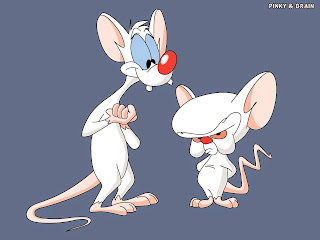


Today, Pinky, we're going to roll out national health IT ... tomorrow, we TAKE OVER THE WORLD!

-- SS